Malaysia — Rainforests, Islands & Street Food Paradise

From the soaring Petronas Towers to ancient Borneo rainforests — where three cultures blend into one extraordinary destination

For: Couple, low-to-medium budget Style: Hostels / backpacking / occasional Airbnb

Malaysia Overview

Petronas Twin Towers Kuala Lumpur skyline

Malaysia is a country split in two — literally. The Peninsular half dangles from mainland Southeast Asia, separated by the South China Sea from Malaysian Borneo (Sabah and Sarawak), which occupies the northern third of Borneo some 600 kilometres to the east.

  • Peninsula: Polished circuit of modern cities, colonial heritage towns, tea-draped highlands and palm-fringed islands connected by excellent highways and affordable buses
  • Borneo: Raw, ancient rainforest, world-class diving, orangutan sanctuaries and indigenous longhouse culture that feels worlds away from Kuala Lumpur's gleaming towers

What makes Malaysia truly distinctive is its multi-ethnic society:

  • Ethnic Malays: About 69% of population, predominantly Muslim
  • Chinese Malaysians: 23%, largely Buddhist and Taoist
  • Indian Malaysians: 7%, mostly Hindu Tamil
  • Indigenous groups: Dozens in Borneo (Iban, Kadazan, Bidayuh and others) whose longhouse traditions predate written history
  • Daily life: Walk through any city and pass a Malay mosque, Chinese temple and Hindu shrine within the same neighbourhood
  • Culinary result: Nasi lemak for breakfast, char kway teow for lunch, roti canai for afternoon snack, banana-leaf curry for dinner – all within a few blocks and costing less than a few euros

For budget-conscious couples, Malaysia hits a sweet spot between comfort and affordability:

  • Language: English widely spoken (legacy of British colonial rule)
  • Infrastructure: Modern and reliable with high safety standards
  • Currency: Malaysian Ringgit (MYR) at roughly 4.7 to the euro
  • Costs: Hostel dorm bed 7-15 EUR, private room 15-35 EUR, hawker-centre meal rarely tops 3.50 EUR
  • Connectivity: Excellent public Wi-Fi, Grab (ride-hailing app) works everywhere
  • Transport: Domestic flights with AirAsia as little as 20 EUR

Travel Style

Budget Couple Focus: Independent travelers mixing hostels with occasional Airbnb stays. Street food and hawker centres for most meals, with the odd restaurant splurge. Local buses, trains and budget airlines between regions.

Daily Budget: 35–55 EUR per couple (accommodation, food, transport, activities)

Key Facts

  • Capital: Kuala Lumpur (KL)
  • Population: ~33 million
  • Language: Bahasa Melayu (official), English widely spoken, Mandarin, Tamil
  • Currency: Malaysian Ringgit (MYR)
  • Exchange Rate: ~4.7 MYR = 1 EUR
  • Religion: Islam (official), Buddhism, Hinduism, Christianity
  • Time Zone: GMT+8
  • States: 13 states + 3 federal territories

Best For

  • Food lovers & hawker-centre explorers
  • Divers & snorkelers (Sipadan, Perhentian)
  • Wildlife enthusiasts (orangutans, hornbills)
  • Rainforest & jungle trekking
  • Cultural immersion (3 cultures in one country)
  • Budget travelers seeking comfort + value
  • Beach & island hoppers

Best Time to Visit Malaysia

Malaysia’s equatorial position means temperatures barely fluctuate — expect 27-33°C year-round almost everywhere — but rainfall patterns vary dramatically depending on which coast you are on and which monsoon is blowing.

  • Key factor: Understanding monsoon rhythms is the single most important factor in planning your trip
  • Get it wrong: Arrive at shuttered resort on deserted island with no ferry back for three months
  • Get it right: Enjoy crystal-clear seas, lush green landscapes and significantly lower prices

Malaysia experiences two monsoon periods:

  • Northeast monsoon (November-March): Drives heavy rains onto peninsula's east coast and eastern shores of Sabah – closes Perhentian Islands, Redang, Tioman and Lang Tengah (resorts shut doors, dive shops pack up, ferry services cease entirely from early November through late February)
  • West coast advantage: Peninsula's west coast (KL, Penang, Langkawi) enjoys its driest and most pleasant weather during exactly this period
  • Southwest monsoon (May-September): Reverses the pattern – west coast sees more frequent afternoon showers (though rarely all-day rain), while east coast basks in calm seas and sunshine
  • Borneo pattern: Follows own slightly different rhythm but broadly aligns with east coast – March to October offers best conditions for climbing Mount Kinabalu, diving Sipadan, or trekking through Sarawak's national parks
Sweet Spot: March – April The narrow window of March to April delivers good weather across virtually all of Malaysia simultaneously. The northeast monsoon has ended (east coast islands reopen in March), the southwest monsoon has not yet arrived, and you avoid the peak-season crowds and prices of December–February. September–October is a similar shoulder-season sweet spot, though with slightly higher rainfall risk on the west coast.
Region Best Months Avoid Notes
West Coast (KL, Penang, Langkawi) Dec – Mar No bad season Year-round destination; May–Sep slightly wetter but still fine
East Coast (Perhentian, Redang, Tioman) Mar – Oct Nov – Feb Islands CLOSE Nov–Feb; ferries stop, resorts shut
Sabah (KK, Kinabalu, Sipadan) Mar – Oct Nov – Feb Wettest Dec–Jan; Sipadan best Apr–Jun
Sarawak (Kuching, Mulu, Bako) Apr – Sep Nov – Feb Drier months best for jungle trekking
Cameron Highlands Jan – Apr None critical Cooler year-round (15–25°C); rain possible any month
East Coast Island Closures Do not plan to visit Perhentian, Redang, Tioman or Lang Tengah between November and February. Resorts close completely, boat services are suspended, and seas can be dangerously rough. Some dive operators on Tioman stay open slightly longer (into early November), but availability is extremely limited and conditions unreliable.

Holiday Considerations

Malaysia’s multi-ethnic calendar means public holidays come frequently — and some cause significant domestic travel surges. Chinese New Year (late Jan/early Feb) and Hari Raya Aidilfitri (Mar 10–11) trigger mass travel as families return to hometowns; buses and flights sell out, accommodation prices spike 50–100% in popular areas, and highways gridlock. Thaipusam (late January) transforms Batu Caves into one of the most spectacular religious festivals in Southeast Asia — absolutely worth experiencing if your timing aligns. National Day (Aug 31) and Malaysia Day (Sep 16) bring patriotic celebrations and some accommodation pressure in KL. Plan around or embrace these events, but book transport and beds well in advance.

Malaysia Map

Malaysia is split across two landmasses separated by over 600 km of the South China Sea. Peninsular Malaysia shares a border with Thailand to the north and looks across the Strait of Malacca to Sumatra, while Malaysian Borneo (Sabah and Sarawak) occupies the northern coast of the world’s third-largest island. The three route options below show how to connect the highlights — from a focused peninsula loop to a grand adventure that spans both halves of the country.

South China Sea Strait of Malacca Sulu Sea THAILAND SINGAPORE INDONESIA INDONESIA (Kalimantan) BRUNEI PENINSULAR MALAYSIA SARAWAK SABAH Mt Kinabalu 4,095m Kuala Lumpur George Town Langkawi Ipoh Cameron H. Melaka Kota Bharu K. Terengganu Johor Bahru Kota Kinabalu Sandakan Kuching Miri Routes Peninsula Classic (2-3w) + East Coast (3w) Grand Malaysia (4+w) --- flight connection

Climate & Weather

Tropical rainforest canopy Malaysia

Malaysia’s climate is classified as tropical equatorial — hot, humid and wet year-round, with no true dry season anywhere in the country. Daytime temperatures hover between 30–33°C at sea level throughout the year, dipping only slightly to 27–29°C at night. Humidity is a constant companion, averaging 80% or higher, and you will feel it the moment you step off the plane. The exception is the highlands: Cameron Highlands and the Genting area sit between 1,000 and 1,800 metres and enjoy significantly cooler temperatures (15–25°C), making them a welcome respite from the lowland heat and a favourite weekend escape for KL residents.

Rainfall in Malaysia is abundant — KL receives around 2,400 mm annually (roughly double that of London) — but it rarely arrives as the dreary, all-day drizzle familiar to Northern Europeans. Instead, tropical rain tends to come in dramatic afternoon thunderstorms that build quickly, dump torrential rain for 30–90 minutes, and then clear to blue skies. These daily showers are part of the rhythm of life here, and locals simply duck under cover for the duration. The key distinction for travelers is between the wetter and less wet sides of the monsoon divide: the northeast monsoon (November–March) brings genuinely heavy, sustained rainfall to the east coast and Borneo, while the southwest monsoon (May–September) delivers milder increases in rain to the west coast that rarely disrupt travel plans.

The Dual Monsoon in Practice Think of Malaysia as having two weather zones operating on opposite schedules. When the east coast is getting drenched and islands are shuttered (Nov–Feb), the west coast is enjoying its best weather. When the west coast sees more showers (May–Sep), the east coast islands are at their sparkling best. Borneo roughly follows the east coast pattern but with its own local variations — Sarawak tends to be slightly wetter than Sabah.

What the Rain Actually Means for Travel

Even during the “wet season” on the west coast, you can expect several hours of sunshine daily. Carry a compact rain jacket or small umbrella, plan outdoor activities for the morning (rain tends to hit mid-afternoon), and embrace the fact that a brief downpour is simply part of the tropical experience. On the east coast during monsoon season, however, the situation is genuinely different — rain can be continuous for days, seas become dangerous, and there is little reason (or ability) to visit the islands.

Monthly Temperatures & Rainfall

The table below shows average temperatures and rainfall for four representative locations across Malaysia. Note how remarkably stable temperatures remain year-round — the real variation is in rainfall, which shifts dramatically between coasts depending on the active monsoon.

Month KL (°C / mm) Penang (°C / mm) Kota Bharu (°C / mm) Kota Kinabalu (°C / mm)
Jan 27–32 / 170 27–32 / 70 24–29 / 610 26–30 / 280
Feb 27–33 / 165 27–32 / 55 24–29 / 340 26–31 / 190
Mar 27–33 / 240 27–32 / 80 24–30 / 170 26–31 / 130
Apr 27–33 / 260 28–33 / 120 25–31 / 90 27–32 / 120
May 27–33 / 200 28–33 / 200 26–32 / 110 27–32 / 200
Jun 27–33 / 130 28–33 / 170 26–32 / 130 27–32 / 250
Jul 27–33 / 130 27–33 / 190 26–32 / 150 27–32 / 220
Aug 27–33 / 150 27–32 / 230 26–32 / 160 27–32 / 230
Sep 27–33 / 180 27–32 / 310 25–31 / 170 27–32 / 240
Oct 27–32 / 260 27–32 / 350 25–30 / 280 27–32 / 290
Nov 27–32 / 280 27–31 / 200 25–29 / 620 27–31 / 310
Dec 27–32 / 240 27–31 / 100 24–29 / 680 27–31 / 310
Reading This Table Green rows indicate the driest, most pleasant months across most regions. Yellow rows are shoulder months with moderate rain. Orange marks the transition into heavier rainfall. Red highlights the wettest months — particularly notable for Kota Bharu (east coast) where November and December rainfall exceeds 600 mm. Temperatures vary by only 2–3°C year-round; it is always hot at sea level.

Peak, Shoulder & Low Seasons

Malaysia’s tourist seasons are driven by a combination of weather patterns, school holidays and international travel trends. Understanding the ebb and flow of visitor numbers helps you time your trip for the best balance of weather, crowds and cost — and in a country where hostel prices can double during peak holiday weekends, this knowledge translates directly into savings.

Season Months Crowds Prices Weather Notes
Peak Dec – Feb, Jul – Aug High +30–50% Dec–Feb: best west coast, worst east coast. Jul–Aug: European summer rush, warm everywhere
Shoulder Mar – May, Sep – Oct Moderate Standard Best value + weather combo. Mar–Apr: east coast reopens. Sep–Oct: last window before east coast closes
Low Jun, Nov Low –10–20% Jun: quiet mid-year lull. Nov: east coast shutting, transition month. Cheapest accommodation
Holiday Price Surges Domestic travel during Chinese New Year (late Jan/early Feb), Hari Raya Aidilfitri (dates shift yearly), and school holidays (mid-Mar, Jun, Nov–Dec) causes accommodation and transport prices to spike significantly. Langkawi, Cameron Highlands and Penang are particularly affected. Book buses and flights 2–4 weeks ahead during these periods.

Optimal Windows for Budget Couples

The March–April shoulder season is the gold standard for budget travelers: the east coast islands have just reopened with fresh-season enthusiasm (some resorts offer early-bird deals), west coast weather remains excellent, Borneo enters its driest stretch, and crowds are thin. September–October is the other prime window — the last chance to dive the east coast islands before November closures, with end-of-season discounts at island resorts. Both periods avoid the premium pricing of Christmas/New Year and the domestic chaos of Chinese New Year.

What to Pack

Packing for Malaysia means preparing for relentless heat, sudden downpours and culturally sensitive environments — all while keeping your bag light enough to haul onto local buses and ferries. The golden rule: if it is not quick-drying, leave it at home. Cotton is your enemy in 80% humidity; synthetics and merino wool are your friends.

Essentials

  • Passport (90-day visa-free for Germans)
  • Universal power adapter (UK Type G / 3-pin)
  • Reef-safe sunscreen (SPF 50+)
  • DEET insect repellent (especially for Borneo)
  • Compact rain jacket or poncho
  • Quick-dry microfibre towel
  • Reusable water bottle with filter
  • Copies of travel insurance documents

Clothing

  • 3–4 lightweight quick-dry tops
  • 2 pairs lightweight trousers/pants (for mosques & temples)
  • 1–2 shorts
  • Modest cover-up for mosque visits (women: headscarf provided at major mosques, bring your own for smaller ones)
  • Light long-sleeve shirt (sun/mosquito protection)
  • Swimwear (2 sets — nothing dries fast in this humidity)
  • Comfortable walking sandals + closed shoes for jungle
  • Light fleece or hoodie (Cameron Highlands, air-con buses)

Activity Gear

  • Reef shoes / water shoes (sharp coral, hot sand)
  • Dry bag (essential for island boat transfers)
  • Snorkel mask (optional — rentals available but quality varies)
  • Headlamp (jungle treks, night walks, power cuts)
  • Leech socks (Taman Negara, Borneo jungle treks)
  • Waterproof phone pouch
  • Small daypack (15–20L) for day hikes
Mosque Dress Code Malaysia’s mosques are generally welcoming to non-Muslim visitors, but modest dress is required: cover knees and shoulders, and women should cover their hair. Major mosques like Masjid Negara (KL) and Masjid Kapitan Keling (Penang) provide free robes and headscarves at the entrance. Smaller mosques may not, so carry a lightweight scarf and long trousers.

Peninsular Malaysia

George Town Penang street art and heritage buildings

Peninsular Malaysia is where most visitors spend the bulk of their time, and for good reason — it packs an extraordinary range of experiences into a compact, well-connected landmass roughly the size of England. The west coast is the main artery: a modern highway and efficient rail network connect the capital KL to the colonial port of Melaka, the tea-scented Cameron Highlands, the food capital of Penang and the duty-free beach paradise of Langkawi. The east coast is wilder and quieter, home to some of Southeast Asia’s best islands and the oldest tropical rainforest on Earth. Getting between them is straightforward: air-conditioned intercity buses run frequently and rarely cost more than 15–20 EUR even for long hauls, while the KTM ETS train zips between KL and Penang in about four hours.

Kuala Lumpur & Surroundings

KL is a city of contrasts where Malay kampung houses survive in the shadow of glass skyscrapers and where a world-class hawker meal costs the same as a cup of coffee at the Petronas Towers’ observation deck. The iconic twin towers remain the city’s calling card, but the real magic lies at street level: the chaotic sensory overload of Chinatown’s Petaling Street, the fragrant garland shops of Little India, the ornate Islamic architecture of Masjid Jamek where the city was founded at the confluence of two rivers, and the stunning Batu Caves — a Hindu temple complex built inside a 400-million-year-old limestone cavern, reached by climbing 272 rainbow-painted steps. Budget travelers will love KL’s hostel scene (concentrated around Chinatown and Bukit Bintang) and its unbeatable street food.

Melaka (Malacca)

Two hours south of KL, Melaka is a UNESCO World Heritage city whose layered history — Malay sultanate, Portuguese fort, Dutch church, British administration — is written into its architecture. The compact historic centre is best explored on foot: wander from the rust-red Dutch Square along Jonker Street’s antique shops and Friday/Saturday night market, past Peranakan townhouses painted in pastel shades, to the hilltop ruins of A Famosa, the oldest European structure in Southeast Asia. Melaka is also where the unique Peranakan (Straits Chinese) culture survives — a fascinating blend of Chinese and Malay traditions visible in food, clothing and ornate shophouse architecture. Two days is enough to cover the highlights; stay in the heritage-house area for atmosphere.

Cameron Highlands

At 1,500 metres elevation, the Cameron Highlands feel like a different country. Temperatures hover around 15–25°C, mist curls through tea plantations that stretch to the horizon, and strawberry farms replace palm oil plantations. The BOH Tea Estate offers free tours and panoramic views; the Mossy Forest boardwalk on Gunung Brinchang leads through an otherworldly landscape of moss-draped trees and pitcher plants. Budget accommodation clusters in Tanah Rata, the main town, where a dorm bed costs 8–12 EUR. It is an ideal two-day stop to cool down between KL and Penang, with excellent hiking trails ranging from easy plantation walks to strenuous jungle climbs.

Ipoh

Often overlooked by international visitors but adored by Malaysian foodies, Ipoh is the capital of Perak state and a rapidly emerging destination. Its old town is a treasure trove of British colonial architecture, Chinese coffee shops and some of the best food in Malaysia — locals argue that Ipoh’s white coffee, bean sprout chicken and sar hor fun (flat rice noodles) surpass even Penang’s versions. The surrounding limestone hills are riddled with cave temples, including the spectacular Kek Lok Tong and Sam Poh Tong. Ipoh makes an excellent half-day or overnight stop between Cameron Highlands and Penang.

Penang (George Town)

Penang is many travelers’ favourite Malaysian destination, and it is easy to see why. George Town, its UNESCO-listed capital, is a living museum of Chinese shophouses, Hindu temples, mosques and colonial buildings — but it is anything but dusty. The city pulses with creative energy: internationally acclaimed street art adorns crumbling walls, indie coffee shops occupy restored heritage buildings, and at dusk the hawker centres come alive with the clatter and sizzle that has earned Penang its reputation as one of Asia’s greatest food cities. Must-eats include char kway teow, assam laksa, hokkien mee, cendol and nasi kandar. Beyond food and heritage, Penang Hill offers panoramic views via a funicular railway, Kek Lok Si is Southeast Asia’s largest Buddhist temple, and the Penang National Park has beaches and a coastal meromictic lake. Budget accommodation in George Town is excellent — heritage hostels with character run 8–15 EUR per bed.

Langkawi

This duty-free archipelago of 99 islands off the northwest coast is Malaysia’s premier beach destination. The main draw is the SkyCab cable car ascending 700 metres to the summit of Gunung Mat Chinchang, where the vertiginous SkyBridge — a curved pedestrian bridge suspended between two peaks — offers breathtaking views of the Andaman Sea. Beyond the tourist highlights, Langkawi rewards exploration: rent a scooter to discover quiet beaches on the north shore, take a mangrove boat tour through Kilim Geoforest Park (UNESCO Global Geopark), or island-hop to Pulau Dayang Bunting’s freshwater lake. The duty-free status means alcohol, chocolate and electronics are significantly cheaper than the mainland. Langkawi is also a common departure point for ferries to/from Penang and the Thai island of Koh Lipe.

East Coast Islands & Taman Negara

The peninsula’s east coast is where Malaysia goes tropical-island-paradise. The Perhentian Islands are the backpacker favourite — two islands (Besar and Kecil) with white sand, turquoise water and budget beach huts from 15 EUR/night. Snorkeling is superb straight off the beach, and PADI Open Water courses cost around 250–300 EUR. Tioman Island, further south, offers similar beauty with better diving variety and a slightly more developed infrastructure. Both are accessible by speedboat from the coast and operate only from March to October. Inland, Taman Negara National Park protects 130 million years of unbroken rainforest — older than the Amazon. The canopy walkway (the world’s longest at 530 metres) is the headline attraction, but overnight jungle hikes, river trips and indigenous Orang Asli village visits offer deeper immersion. Access is by bus from KL to Jerantut, then boat upriver to park headquarters.

Malaysian Borneo

Borneo rainforest river landscape Sabah

Malaysian Borneo — comprising the states of Sabah and Sarawak — feels like stepping into a completely different country from the peninsula. Here, 130-million-year-old primary rainforest stretches unbroken across mountain ranges, orangutans swing through the canopy, and indigenous communities maintain longhouse traditions that predate the arrival of Islam and Christianity by centuries. Getting here requires a flight from Peninsular Malaysia (AirAsia runs multiple daily routes from KL to both Kota Kinabalu and Kuching, typically 20–60 EUR), and once you arrive, distances are larger, roads slower and infrastructure simpler. But that is precisely the appeal: Borneo rewards the effort with experiences that simply do not exist on the peninsula.

Sabah

Kota Kinabalu (KK) is the gateway to Sabah and a surprisingly pleasant coastal city with excellent seafood markets, sunset views over the South China Sea and island-hopping opportunities to the nearby Tunku Abdul Rahman Marine Park. But the real attraction looms behind the city: Mount Kinabalu (4,095 m), the highest peak in Southeast Asia between the Himalayas and New Guinea. The two-day climb is non-technical but physically demanding — you sleep at 3,270 m and summit for sunrise at 4,095 m — and costs around 200–350 EUR including mandatory guide, park fees and mountain lodge. Permits are limited, so book 2–3 months ahead.

East of KK, Sandakan is the base for wildlife experiences: the Sepilok Orangutan Rehabilitation Centre is one of only four places in the world where you can watch semi-wild orangutans being fed and rehabilitated, and the adjacent Bornean Sun Bear Conservation Centre houses the world’s smallest bears. The Kinabatangan River, accessible from Sandakan, offers affordable river-safari experiences where you can spot proboscis monkeys, pygmy elephants, crocodiles and hornbills from a small boat — three-day packages run 100–150 EUR including meals and guided trips. At the southeastern tip of Sabah, Sipadan Island is consistently rated among the world’s top five dive sites, with sheer walls dropping 600 metres into the abyss, swirling barracuda tornados and regular turtle encounters. Permits are limited to 120 divers per day; book through licensed operators based on Mabul or Semporna.

Sarawak

Kuching, Sarawak’s charming capital, is a revelation for travelers who assumed Malaysian Borneo was all jungle and nothing else. This compact, walkable city along the Sarawak River has a thriving food scene (laksa Sarawak is legendary), excellent museums covering indigenous culture and natural history, colourful Chinese temples and a waterfront promenade that comes alive at sunset. It is also one of Malaysia’s most affordable cities for accommodation, with quality hostels from 6–10 EUR.

From Kuching, day trips reach two exceptional national parks. Bako National Park — Sarawak’s oldest — is famous for its proboscis monkeys, dramatic sea stacks and seven distinct vegetation zones packed into a compact area accessible by a 20-minute boat ride. Semenggoh Nature Reserve lies just 30 minutes from the city and offers morning and afternoon feeding sessions where semi-wild orangutans emerge from the forest canopy — a more intimate and less crowded experience than Sepilok. Further afield, Gunung Mulu National Park (a flight from Kuching or Miri) contains the world’s largest cave passage (Deer Cave), an enormous cave chamber (Sarawak Chamber, big enough to fit 40 Boeing 747s) and the razor-sharp limestone Pinnacles formation that requires a strenuous two-day trek to reach.

Peninsula vs Borneo: Quick Comparison The peninsula is easier, cheaper and faster to travel — think efficient buses, budget trains and short distances. Borneo requires more planning, higher activity costs (guides are mandatory for most treks and wildlife tours) and domestic flights between regions, but delivers genuinely wild, once-in-a-lifetime experiences. For a two-to-three-week trip, most travelers focus on the peninsula; with four or more weeks, adding Borneo becomes highly worthwhile.

Top Sightseeing

Batu Caves rainbow stairs Kuala Lumpur

Malaysia punches well above its weight in sightseeing variety. Within a single trip, you can stand atop one of the world’s tallest twin towers, climb inside a 400-million-year-old cave temple, stroll through a UNESCO World Heritage city, ride a cable car above ancient rainforest, dive a world-famous oceanic wall and watch orangutans being fed in a Borneo rehabilitation centre. The following list highlights the absolute must-sees — the places that define Malaysia and that you will remember long after the tan fades.

# Attraction Location Why Visit Budget Tip
1 Petronas Twin Towers KL Iconic 452m twin skyscrapers; Skybridge + observation deck Book tickets online 2 days ahead (€8); KLCC park below is free
2 Batu Caves KL (13 km north) Hindu temple inside limestone cave; 272 rainbow steps; monkeys Free entry; take KTM Komuter train (€0.45)
3 George Town Heritage Zone Penang UNESCO shophouse district; street art; hawker food capital Free to explore on foot; rent a bike (€3/day)
4 Langkawi SkyCab + SkyBridge Langkawi Cable car to 700m summit; curved suspension bridge between peaks Combo ticket ~€16; go early morning to avoid clouds
5 Cameron Highlands Tea Plantations Pahang BOH Tea Estate; rolling emerald hills; cool mountain air Free factory tour; tea + scone ~€3
6 Perhentian Islands Terengganu (east coast) Turquoise water; beach snorkeling; budget paradise Speedboat €15 return; snorkel gear rental €3/day
7 Taman Negara Canopy Walk Pahang (interior) World’s longest canopy walkway (530m) in 130M-year-old rainforest Park entry €0.20; canopy walk €1; stay in Mutiara Taman Negara area
8 Mount Kinabalu Sabah, Borneo SE Asia’s highest peak (4,095m); 2-day summit climb Budget ~€190–340 total; book 2–3 months ahead
9 Sipadan Island Sabah, Borneo World top-5 dive site; turtle tornados; barracuda walls 3-dive Sipadan permit ~€105–150; stay on Mabul Island
10 Semenggoh / Sepilok Orangutans Sarawak / Sabah Watch semi-wild orangutans at feeding platforms Semenggoh entry €2; Sepilok €7; morning sessions best
11 Melaka Historic Centre Melaka UNESCO city; Portuguese, Dutch, British & Peranakan heritage layers Free to walk; Jonker Street Night Market Fri–Sat evenings
12 Gunung Mulu Caves Sarawak, Borneo World’s largest cave passage; bat exodus at dusk; Pinnacles trek Fly from Miri or Kuching; park entry €7; 3-day Pinnacles trek ~€105

Culture & Customs

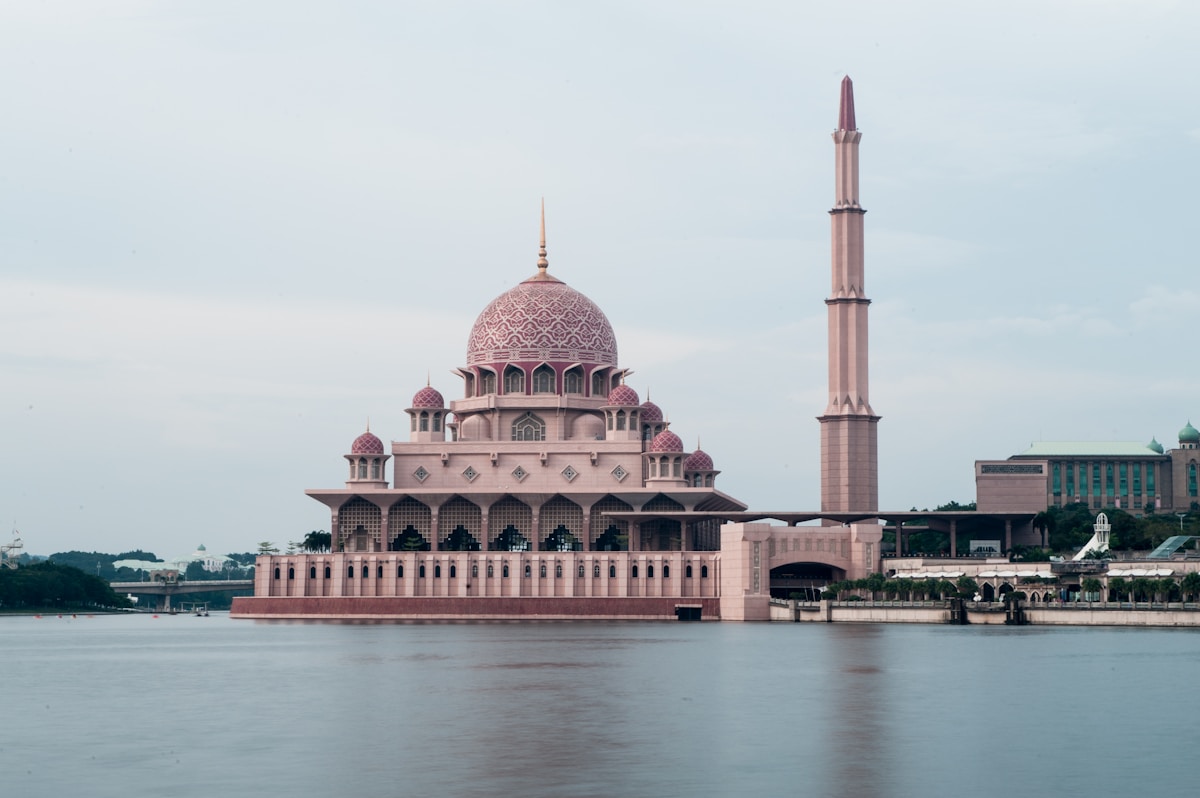
Putrajaya Mosque with pink dome glowing at sunset

Malaysia’s cultural identity is defined by the coexistence — and occasional creative collision — of its three major ethnic communities. The Malay majority is predominantly Muslim, and Islam shapes many aspects of public life: the call to prayer echoes from mosques five times daily, alcohol is available but not ubiquitous, and the national legal system includes Sharia courts that apply to Muslim citizens alongside secular civil law. Chinese Malaysians, largely Buddhist and Taoist, dominate much of the business landscape and have preserved vibrant temple culture, clan associations and festival traditions. Indian Malaysians, mostly Hindu Tamil, contribute their own layer through ornate temples, flower garland shops and a culinary tradition centred on banana-leaf rice and fiery curries. In Borneo, indigenous groups add yet another dimension: the Iban, Kadazan-Dusun, Bidayuh and others maintain traditions of longhouse living, rice wine (tuak), harvest festivals and animist spiritual practices alongside Christianity, which arrived with European missionaries.

For travelers, this cultural mosaic is an enormous gift. In a single day in Penang, you might visit a Malay mosque, a Chinese clan temple and a Hindu shrine — all within walking distance — and eat food from each tradition at adjacent hawker stalls. Malaysia’s multiculturalism is not theoretical; it is lived, tasted and visible on every street corner. That said, respect for local customs is important and appreciated.

Essential Etiquette

Religious Sites

  • Remove shoes before entering mosques and temples
  • Cover knees and shoulders at mosques; women cover hair
  • Ask permission before photographing worshippers
  • Major mosques welcome visitors outside prayer times
  • Do not touch Buddha statues or point feet at them

Social Customs

  • Use the right hand for eating and passing items (left is considered unclean)
  • Greet with a slight nod and smile; handshakes are common between same genders
  • Remove shoes when entering homes
  • Pointing with the index finger is rude — use the thumb or an open palm
  • “Face” matters — avoid public confrontation or loud criticism

Practical Notes

  • Alcohol is available in Chinese restaurants, supermarkets and tourist bars, but not everywhere
  • Pork dishes are served in Chinese and non-halal establishments; “halal” restaurants serve no pork or alcohol
  • Friday is the Muslim holy day — some shops close for Friday prayers (12–2 pm)
  • Dress modestly in rural areas and the east coast
  • PDA (public displays of affection) should be minimal

Festivals Worth Experiencing

Thaipusam (late January/early February) at Batu Caves is one of the most visually extraordinary religious festivals in the world — Hindu devotees carry elaborate kavadi structures and pierce their bodies with hooks and skewers as acts of devotion, while hundreds of thousands of worshippers climb the 272 steps in a river of colour and prayer. Chinese New Year transforms Chinatowns across the country with lion dances, red lanterns and open-house gatherings where even non-Chinese neighbours are welcomed with mandarin oranges and ang pow (red envelopes). Hari Raya Aidilfitri, marking the end of Ramadan, brings open-house celebrations, traditional Malay clothing (baju kurung and baju melayu) and an abundance of festive foods. In Borneo, the Gawai Dayak harvest festival (June 1) offers a rare window into indigenous Iban and Bidayuh culture, with traditional music, dance and generous quantities of tuak rice wine.

Malaysian Food & Street Food

Malaysian hawker centre street food dishes

If you travel to Malaysia for one reason only, make it the food. This is a country where culinary excellence is a national obsession — where taxi drivers will debate the best nasi lemak stall with the passion of a sommelier discussing Burgundy vintages, where three distinct culinary traditions (Malay, Chinese and Indian) have been cross-pollinating for centuries, and where a Michelin-worthy meal can cost less than a bus ticket. The hawker centre — an open-air or semi-covered food court housing dozens of independent stalls — is the beating heart of Malaysian dining, and no guide can prepare you for the sheer sensory overload of your first visit: the clatter of woks, the hiss of grills, the clouds of aromatic smoke and the impossible task of choosing from fifty stalls when everything smells incredible.

Must-Try Dishes

Dish Origin What It Is Where to Try Cost (MYR)
Nasi Lemak Malay Coconut rice with sambal, anchovies, peanuts, egg, cucumber — the national dish Everywhere; Village Park (KL) is iconic 5–12
Char Kway Teow Chinese Smoky wok-fried flat noodles with prawns, cockles, bean sprouts, chives Penang — Lorong Selamat or Kafe Heng Huat 7–12
Roti Canai Indian-Malay Flaky flatbread served with dhal or curry; crispy outside, fluffy inside Any mamak restaurant; best late night 1.50–3
Laksa Varies Spicy noodle soup; Penang assam laksa (sour fish) vs curry laksa (coconut) Penang (assam); KL (curry); Kuching (Sarawak laksa) 6–10
Satay Malay Charcoal-grilled meat skewers with peanut sauce, ketupat rice cake Kajang (satay capital); Lau Pa Sat-style stalls in KL 1 per stick
Banana Leaf Rice Indian Rice served on banana leaf with curries, vegetables, papadum, rasam Devi’s Corner or Sri Nirwana Maju (KL) 10–15
Nasi Kandar Indian-Malay Rice drowned in multiple curry gravies; choose your meats and sides Penang — Line Clear or Nasi Kandar Beratur 8–15
Cendol Malay Shaved ice with green pandan jelly, coconut milk, palm sugar syrup, red beans Penang Road Famous Cendol; Melaka Jonker Street 3–5

Drinks

Teh tarik (“pulled tea”) is Malaysia’s unofficial national drink — sweet, milky black tea poured theatrically between two cups to create a frothy top. Order it at any mamak restaurant for €0.30–0.64. Kopi-O is the local black coffee, often roasted with sugar and margarine for a caramelised richness unlike anything in Europe. Fresh coconut water (kelapa muda) is served ice-cold from the shell everywhere for €0.65–1 — the perfect heat antidote. For alcohol, Tiger Beer is the regional lager (€3–4 at hawker centres, cheaper in Langkawi’s duty-free zone), and craft beer bars are emerging in KL and Penang, though prices approach European levels.

Hawker Centre Survival Guide At a hawker centre, find a table first, then walk around and order from multiple stalls — they will find you by your table number. Each stall specialises in one or two dishes (that is how they perfect them). Pointing at what others are eating works perfectly as a communication strategy. Most stalls are cash only — bring small notes. Peak hours are 12–1 pm and 6–8 pm; arrive early or late for the best selection. Look for stalls with queues of locals — the line is the quality indicator.

Diving & Snorkeling

Tropical coral reef sea turtle diving

Malaysia is one of Southeast Asia’s premier diving destinations, offering everything from beginner-friendly reef snorkeling off white-sand beaches to world-class wall diving that draws experienced divers from across the globe. The country sits within the Coral Triangle — the most biodiverse marine region on Earth — and its waters harbour over 600 coral species and 3,000 fish species. Whether you are completing your first PADI Open Water certification or chasing pelagic encounters on a deep wall, Malaysia delivers exceptional underwater experiences at prices significantly below those in the Maldives, Australia or the Caribbean.

Site Region Highlight Level Season Cost (2 dives)
Sipadan Sabah Top-5 world site; turtle tornados, barracuda walls, 600m drop-offs Advanced Apr–Jun best €105–150
Perhentian Islands Terengganu Affordable reef diving; turtles; PADI courses ~€255 Beginner–Inter Mar–Oct €43–60
Tioman Island Pahang Diverse sites; coral gardens; reef sharks; good vis Beginner–Adv Mar–Oct €47–64
Mabul Island Sabah World-class muck diving; frogfish, blue-ring octopus, nudibranchs Intermediate Year-round €60–85
Redang Island Terengganu Crystal visibility; healthy hard coral; family-friendly Beginner Mar–Oct €53–74
Layang-Layang Sabah (offshore) Remote atoll; hammerhead sharks Apr–May; pristine walls Advanced Mar–Aug Resort packages only

Snorkeling Without Diving

If diving is not your thing, Malaysia offers superb snorkeling directly from the beach — no boat required. The Perhentian Islands are the standout: wade in from Long Beach or Coral Bay on Perhentian Kecil and you are immediately among sea turtles, reef fish and healthy coral. Tioman’s Juara Beach and Redang’s main beach offer similarly easy access. Snorkel gear rents for €3–4.5 per day on most islands, or bring your own mask for better fit. Snorkeling boat trips (half-day, visiting 3–4 sites) typically cost €8–11 per person including equipment.

Sipadan Permit System Only 120 divers are allowed on Sipadan Island per day, controlled by a government permit system. Permits are allocated to licensed dive operators based on Mabul and Semporna — you cannot book independently. Most operators require a minimum 3-night stay package. Book as far ahead as possible (4–8 weeks minimum); peak season (Apr–Jun) sells out months ahead. Budget approximately €320–530 for a 3-night Mabul package including 1–2 Sipadan dive days.

Walks & Hikes

Mountain hiking trail with morning mist

Malaysia’s hiking ranges from gentle tea-plantation strolls in the cool highlands to the gruelling two-day ascent of Southeast Asia’s highest peak. The country’s 130-million-year-old rainforests — among the oldest continuous ecosystems on Earth — offer some of the most biodiverse trekking environments anywhere, with the soundtrack of gibbons, cicadas and hornbills providing a constant tropical backdrop. Here are the standout walks and hikes, ordered from easiest to most challenging.

Trail Location Difficulty Duration Highlights
Penang Hill Heritage Trail Penang Easy 1–2 hrs Funicular up, walk down through colonial-era gardens; city views
BOH Tea Plantation Trails Cameron Highlands Easy 1–3 hrs Rolling tea fields; factory tour; Mossy Forest boardwalk nearby
Taman Negara Canopy Walk Pahang Easy–Mod 2–4 hrs 530m canopy walkway at 45m height; river trails; jungle sounds
Bako National Park Trails Sarawak Easy–Mod 2–7 hrs Proboscis monkeys; sea stacks; 7 vegetation zones; beach coves
Kilim Geoforest Kayak Trail Langkawi Easy 3–4 hrs Mangrove kayaking; cave visit; eagle feeding (guided tour)
Cameron Highlands Trail 10 Cameron Highlands Moderate 3–5 hrs Jungle trail to Gunung Jasar (1,670m); requires guide recommended
Taman Negara Night Walk Pahang Moderate 2–3 hrs Guided nocturnal jungle walk; spiders, insects, sleeping birds, possible civet cats
Mulu Pinnacles Trek Sarawak Hard 2–3 days Razor-sharp limestone pinnacles; steep ascent; boat + jungle camp
Mount Kinabalu Summit Sabah Hard 2 days 4,095m summit at sunrise; via ferrata option; altitude acclimatisation needed
Leech Country Leeches are an unavoidable reality of lowland jungle trekking in Malaysia, especially after rain. They are harmless (no disease transmission) but psychologically challenging for first-timers. Wear long trousers tucked into socks, apply DEET or tobacco-infused leech repellent to footwear, and carry salt to remove attached leeches. Leech socks — tightly woven fabric tubes that cover from ankle to knee — are the gold standard and can be purchased cheaply at Taman Negara and Borneo park shops.

Wildlife & Nature

Orangutan in Borneo rainforest canopy

Borneo is one of only two places on Earth where orangutans survive in the wild (the other is Sumatra), and Malaysian Borneo offers the most accessible and affordable encounters with these remarkable great apes. But orangutans are just the headline act in a cast of extraordinary wildlife that includes proboscis monkeys with their pendulous noses, pygmy elephants (the smallest elephant subspecies), sun bears (the world’s smallest bears), rhinoceros hornbills with their spectacular casques, sea turtles nesting on remote beaches, and a staggering diversity of insects, reptiles and amphibians that makes every jungle walk a nature documentary in real time.

Where to See What

Orangutans

  • Semenggoh (Sarawak): 30 min from Kuching; morning/afternoon feedings; intimate, less crowded. Entry €2
  • Sepilok (Sabah): Larger, more famous centre; feeding platform viewing; adjacent sun bear centre. Entry €7
  • Wild sightings: Possible along the Kinabatangan River and in Danum Valley (Sabah)

Proboscis Monkeys

  • Bako National Park (Sarawak): Reliable sightings on park trails; day trips from Kuching
  • Kinabatangan River (Sabah): Seen from boat during river safari tours
  • Labuk Bay (Sabah): Feeding platform with guaranteed sightings near Sandakan

Marine Life

  • Sea turtles: Snorkeling at Perhentian, diving at Sipadan; nesting at Turtle Islands (Sabah, limited access)
  • Whale sharks: Seasonal (Mar–May) off Kota Kinabalu; sightings not guaranteed
  • Reef sharks: Common at Sipadan, Tioman outer reefs and Layang-Layang

Other Highlights

  • Pygmy elephants: Kinabatangan River floodplains (Sabah); best Jan–Mar
  • Sun bears: Bornean Sun Bear Conservation Centre, Sepilok (Sabah)
  • Hornbills: Eight species in Borneo; look for rhinoceros hornbills at Bako and along Kinabatangan
  • Fireflies: Kuala Selangor (1.5 hrs from KL); evening boat rides along mangrove rivers
Best Wildlife Budget Combo For the best value wildlife experience, base yourself in Kuching for Semenggoh orangutans + Bako proboscis monkeys (both doable as day trips, total cost under €17 for entry + transport), then fly to Sandakan for Sepilok + a 3-day Kinabatangan River safari package (100–150 EUR including meals, boat trips and accommodation). This combination covers all the “Big Five” of Borneo wildlife in about a week.

Hidden Gems

Aerial view of boats on turquoise waters at Perhentian Islands

Malaysia’s main tourist circuit is well-trodden for good reason, but some of the country’s most rewarding experiences hide just beyond the popular trail. These hidden gems reward travelers who are willing to take a detour, accept slightly less polished infrastructure, or simply ask a local “where would you go?” None requires expedition-level effort; most are reachable by public transport or a short domestic flight.

Ipoh Old Town GEM

Often bypassed between Cameron Highlands and Penang, Ipoh is a quiet revelation. Its old town rivals Penang’s for heritage architecture but with a fraction of the tourists. White coffee culture is an institution — sip the original at Nam Heong or Sin Yoon Loong. The surrounding limestone hills harbour stunning cave temples (Kek Lok Tong, Sam Poh Tong) with gardens that could be in a Chinese painting. Budget accommodation is cheap even by Malaysian standards, and the food scene is exceptional.

Royal Belum Rainforest GEM

In the far north of Perak state, Royal Belum is a 130-million-year-old rainforest — older than the Amazon — that sees almost no international tourists. Access is via Gerik, from where boats navigate a vast reservoir into pristine jungle. Wildlife includes all ten Malaysian hornbill species, elephants, tigers (extremely rare) and the massive Rafflesia flower. Multi-day houseboat or jungle-camp tours run 200–400 EUR. Come prepared for adventure: facilities are basic and mobile signal nonexistent.

Pulau Kapas GEM

While backpackers crowd the Perhentians, tiny Pulau Kapas — just 15 minutes by boat from Marang on the east coast — offers a quieter, more intimate island experience. The single beach has a few budget guesthouses, snorkeling is excellent straight off the shore, and the island can be walked end to end in 30 minutes. Same season restrictions as other east coast islands (open Mar–Oct), but with significantly fewer visitors and lower prices.

Kuching Food Scene GEM

Overshadowed by Penang’s culinary fame, Kuching is quietly one of Malaysia’s best food cities. Sarawak laksa — a coconut-based prawn paste noodle soup topped with shredded chicken, prawns and omelette strips — is genuinely unique and was declared by the late Anthony Bourdain as “breakfast of the gods.” Kolo mee (springy noodles with pork and shallot oil) is another Kuching exclusive. The Top Spot Food Court on the roof of a car park serves the freshest, cheapest seafood in Borneo.

Danum Valley WILD

Deep in Sabah’s interior, Danum Valley Conservation Area protects 43,800 hectares of undisturbed primary lowland rainforest — the kind of jungle that covered Borneo before logging. This is one of the best places to spot wild orangutans, clouded leopards and sun bears in their natural habitat (no feeding stations, no platforms). The Borneo Rainforest Lodge offers packages from €130–190 per night including guided walks. Expensive by Malaysian standards, but a genuinely rare wilderness experience.

Kelabit Highlands WILD

Accessible only by small plane from Miri, the Kelabit Highlands sit at 1,200 metres in Sarawak’s remote interior. The Kelabit people maintain a traditional rice-farming culture in this elevated valley, and multi-day treks between longhouse settlements — staying with local families — offer one of Borneo’s most authentic cultural experiences. The town of Bario is the starting point; expect basic accommodation, cool mountain weather and complete detachment from the modern world.

Route 1: Classic Peninsula (2–3 Weeks) RECOMMENDED

This is the route that most first-time visitors should follow — and the one we recommend for couples with 2–3 weeks who want to experience Malaysia’s greatest hits without the added cost and logistics of Borneo. It follows the west coast from south to north, climbing from sea level to the highlands and back down, passing through four UNESCO-worthy destinations and eating exceptionally well at every stop. Transport is straightforward: efficient intercity buses and the KTM ETS train connect all major points.

Kuala Lumpur & Melaka (4 days) ↓ bus 4h Cameron Highlands & Ipoh (3 days) ↓ train 2h (KTM ETS) Penang / George Town (3 days) ↓ ferry 2.5h Langkawi (3 days) ↓ fly out or ferry back

Day-by-Day Breakdown (2-Week Version: 13 Nights)

Kuala Lumpur & Melaka (4 nights)

Days 1–4 — Arrive and acclimatise to the heat. Day 1: Petronas Towers (book ahead), KLCC Park, Bukit Bintang street food. Day 2: Day trip to Melaka (2h drive): Jonker Street, Dutch Square, Christ Church, A Famosa ruins, Nyonya cuisine, river cruise. Return to KL. Day 3: Batu Caves morning visit, Chinatown (Petaling Street), Masjid Jamek, Central Market, Jalan Alor night food street. Day 4: Islamic Arts Museum, National Mosque, KL Forest Eco Park, evening at the rooftop Heli Lounge Bar for skyline views. Stay in Chinatown or Bukit Bintang area for best hostel value (€6–8.5/dorm).

Cameron Highlands & Ipoh (3 nights)

Days 5–7 — Bus from KL to Cameron Highlands (4h, €6–8.5). Day 1: BOH Tea Estate visit, Mossy Forest boardwalk, strawberry farm. Day 2: Hike Trail 10 to Gunung Jasar or Trail 4 through jungle, explore Tanah Rata town and its Indian restaurants. Day 3: Day trip to Ipoh (1.5h): Old Town on foot, Concubine Lane, heritage buildings, white coffee at legendary kopitiam shops, Kek Lok Tong and Sam Poh Tong cave temples. Return to Cameron Highlands. Bring a light jacket — evenings drop to 15°C. Dorms €6–7.5 in Tanah Rata.

Penang / George Town (3 nights)

Days 8–10 — KTM ETS train from Cameron Highlands to Butterworth (2 hours, €6–7.5), then ferry to George Town (15 minutes, €0.25). Day 1: Heritage core walk — street art trail, Khoo Kongsi clan temple, Kapitan Keling Mosque, Little India. Day 2: Kek Lok Si temple, Penang Hill funicular, Air Itam laksa, hawker centre marathon — Gurney Drive, New Lane, Chulia Street. Day 3: Penang National Park hike to Monkey Beach, clan jetties, or Entopia butterfly garden. Hostels in George Town €7–11/dorm.

Langkawi (3 nights)

Days 11–13 — Ferry from Penang (2.5 hours, €13–15). Day 1: Settle in, rent a scooter (€6–7.5/day), explore Pantai Cenang beach. Day 2: SkyCab cable car and SkyBridge, Oriental Village, island-hopping boat trip. Day 3: Kilim Geoforest Park mangrove tour, duty-free shopping, sunset at Pantai Kok. Day 14 departure. From Langkawi you can fly onward (AirAsia to KL, €11–21), ferry to Koh Lipe in Thailand, or ferry back to Penang. Accommodation on Pantai Cenang €8–13/dorm or budget room.

3-Week Extension: Add 1 night to each stop (5+4+4+4 = 17 nights) or add Taman Negara as a 5th stop with 3 nights for jungle trekking, canopy walkway, and Orang Asli village visits.

Strengths

  • Most budget-friendly route (no flights required)
  • Excellent transport connections throughout
  • Covers Malaysia’s top food destinations
  • Mix of city, heritage, highlands, islands
  • Good flexibility — easy to extend or shorten

Misses

  • No Borneo (orangutans, Sipadan, Kinabalu)
  • No east coast islands (Perhentian, Tioman)
  • Less wildlife variety than Borneo-inclusive routes
  • West coast beaches good but not spectacular
Category Estimated Cost (Couple, €) EUR Equivalent
Accommodation (17 nights) 1,700–2,550 360–540
Food (17 days) 1,020–1,700 215–360
Transport 400–600 85–130
Activities 300–500 65–105
Total (couple, 2.5 weeks) 3,420–5,350 ~730–1,140

Route 2: Peninsula + East Coast Islands (3 Weeks)

This route extends the Classic Peninsula loop by adding the stunning east coast islands — a combination that gives you Malaysia’s best food cities and its best beach/snorkeling experiences. The catch is seasonal: the east coast islands only operate March through October, so this route only works during those months. The logistics require crossing the peninsula from west to east (easy by bus), spending time on the islands, and then either looping back or flying out from the east coast.

Season-Dependent Route This itinerary only works March–October. Outside these months, east coast islands are completely closed (no ferries, no accommodation). If visiting November–February, stick to Route 1 (west coast only) or Route 3 (add Borneo instead).
Kuala Lumpur (3 days) ↓ bus 4h + boat Taman Negara (3 days) ↓ bus 5h + boat Perhentian Islands (4 days) ↓ bus 5h Cameron Highlands & Ipoh (3 days) ↓ train 2h Penang (3 days) ↓ ferry 2.5h Langkawi (4 days)

Day-by-Day Breakdown (20 Nights)

Kuala Lumpur (3 nights)

Days 1–3 — Arrive and acclimatise. Day 1: Petronas Towers (book ahead), KLCC Park, Bukit Bintang street food. Day 2: Day trip to Melaka (2h each way): Jonker Street, Dutch Square, Christ Church, A Famosa ruins, Nyonya cuisine, river cruise. Return to KL. Day 3: Batu Caves morning visit, Chinatown (Petaling Street), Central Market, Jalan Alor night food street. Stay in Chinatown or Bukit Bintang area (€6–8.5/dorm).

Taman Negara (3 nights)

Days 4–6 — Bus from KL to Jerantut (3–4 hours), then scenic boat ride upriver to park headquarters at Kuala Tahan. Day 1: Canopy walkway and short jungle trails. Day 2: Boat trip to Lata Berkoh rapids and Orang Asli village visit, river tubing. Day 3: Night safari or overnight jungle hide (sitting quietly at a salt lick waiting for nocturnal wildlife — deer, tapir, possibly elephants). Budget guesthouses in Kuala Tahan from €7–11/night.

Perhentian Islands (4 nights)

Days 7–10 — Bus from Taman Negara to Kuala Besut (5h), then speedboat to the Perhentians (30 minutes, €15 return). Choose Perhentian Kecil (backpacker island — budget huts, party vibe on Long Beach, quieter at Coral Bay) or Perhentian Besar (slightly upmarket, calmer, better coral). Snorkel straight from the beach — turtles are almost guaranteed. Diving, turtle watching, beach relaxation. Consider a PADI Open Water course (~€235–300, 3–4 days) if you have the time. Budget beach huts €13–21 for a double.

Cameron Highlands & Ipoh (3 nights)

Days 11–13 — Bus from Kuala Besut to Cameron Highlands (5–7h depending on route). Day 1: BOH tea plantation, Mossy Forest trek, strawberry farms. Day 2: Night market, jungle trails (Trail 10 to Gunung Jasar or Trail 4). Day 3: Day trip to Ipoh (1.5h — cave temples, white coffee, old town, Concubine Lane). Return to Cameron Highlands. Dorms €6–7.5 in Tanah Rata.

Penang / George Town (3 nights)

Days 14–16 — Bus to Penang. Day 1: George Town street art trail, Khoo Kongsi clan temple, Little India. Day 2: Kek Lok Si temple, Penang Hill funicular, hawker food tour (Gurney Drive, New Lane, Chulia Street). Day 3: Clan jetties, Penang National Park, or beach time. Hostels €7–11/dorm.

Langkawi (4 nights)

Days 17–20 — Ferry from Penang to Langkawi (2.5h, €13–15). Day 1: Settle in, rent scooter, Pantai Cenang beach. Day 2: SkyCab cable car, Sky Bridge, Oriental Village. Day 3: Island hopping tour, snorkeling. Day 4: Mangrove kayaking, duty-free shopping, sunset at Pantai Kok. Day 21 departure. Accommodation on Pantai Cenang €8–13/dorm or budget room.

Strengths

  • Best of both coasts in a single trip
  • Incredible snorkeling/diving at Perhentians
  • Taman Negara adds genuine wilderness
  • Still no flights needed (all bus + boat)
  • Good variety: city, jungle, island, heritage, highlands

Trade-offs

  • Only possible March–October
  • More travel days (cross-peninsula buses)
  • Still no Borneo
  • Slightly higher total budget (island costs + more transport)
  • 3 weeks feels packed — limited flexibility
Category Estimated Cost (Couple, €) EUR Equivalent
Accommodation (21 nights) 2,100–3,150 450–670
Food (21 days) 1,260–2,100 270–450
Transport 550–800 115–170
Activities (inc. snorkeling/diving) 500–900 105–190
Total (couple, 3 weeks) 4,410–6,950 ~940–1,480

Route 3: Grand Malaysia inc. Borneo (4+ Weeks)

This is the comprehensive Malaysia experience — both halves of the country, all the major highlights, and experiences that range from hawker-centre feasting in Penang to orangutan encounters in Borneo’s ancient rainforest. It requires at least four weeks (five is more comfortable), includes domestic flights to and within Borneo, and costs more than the peninsula-only routes. But if your schedule and budget allow, this is the route that delivers the full picture of what makes Malaysia extraordinary.

Kuala Lumpur (4 days) ↓ bus 4h Cameron Highlands & Ipoh (3 days) ↓ train 2h Penang (4 days) ↓ ferry 2.5h Langkawi (3 days) ↓ fly Langkawi → KL → Kuching (~€32–53) Kuching (4 days) — Semenggoh, Bako NP, food scene ↓ fly Kuching → Kota Kinabalu (~€21–38) Kota Kinabalu & Mt Kinabalu (4 days) — islands, climb, seafood ↓ bus 6h Sandakan & Kinabatangan (4 days) — Sepilok, Sun Bears, river safari ↓ fly Sandakan → KL (~€26–43) or continue to Semporna for Sipadan

Day-by-Day Breakdown (26 Nights, 27 Days)

Kuala Lumpur (4 nights)

Days 1–4 — Arrive and acclimatise. Day 1: Petronas Towers (book ahead), KLCC Park, Bukit Bintang street food. Day 2: Day trip to Melaka (2h each way): Jonker Street, Dutch Square, Christ Church, A Famosa ruins, Nyonya cuisine, river cruise. Return to KL. Day 3: Batu Caves morning visit, Chinatown (Petaling Street), Central Market, Jalan Alor night food street. Day 4: Islamic Arts Museum, National Mosque, KL Forest Eco Park, evening at Heli Lounge Bar for skyline views. Stay in Chinatown or Bukit Bintang area (€6–8.5/dorm).

Cameron Highlands & Ipoh (3 nights)

Days 5–7 — Bus from KL to Cameron Highlands (4h). Day 1: BOH Tea Estate visit, Mossy Forest boardwalk, strawberry farm. Day 2: Hike Trail 10 to Gunung Jasar or Trail 4 through jungle, explore Tanah Rata town and its Indian restaurants. Day 3: Day trip to Ipoh (1.5h): Old Town on foot, Concubine Lane, white coffee at legendary kopitiam shops, Kek Lok Tong and Sam Poh Tong cave temples. Return to Cameron Highlands. Dorms €6–7.5 in Tanah Rata.

Penang / George Town (4 nights)

Days 8–11 — Train from Cameron Highlands to Butterworth (2h), ferry to George Town (15 min, €0.25). Day 1: Heritage core walk — street art trail, Khoo Kongsi clan temple, Kapitan Keling Mosque, Little India. Day 2: Kek Lok Si temple, Penang Hill funicular, Air Itam laksa. Day 3: Hawker centre marathon — Gurney Drive, New Lane, Chulia Street. Day 4: Penang National Park hike to Monkey Beach, clan jetties, or Entopia butterfly garden. Hostels €7–11/dorm.

Langkawi (3 nights)

Days 12–14 — Ferry from Penang (2.5h, €13–15). Day 1: Settle in, rent scooter, Pantai Cenang beach. Day 2: SkyCab cable car and SkyBridge, Oriental Village, island-hopping boat trip. Day 3: Mangrove kayaking, duty-free shopping, sunset at Pantai Kok. Accommodation on Pantai Cenang €8–13/dorm or budget room.

Borneo Segment Detail

Kuching (4 nights)

Days 15–18 — Fly from Langkawi via KL to Kuching (AirAsia, €32–53 total). Day 1: Kuching waterfront, Sarawak Museum, Main Bazaar, evening at Top Spot Food Court for seafood. Day 2: Semenggoh orangutan feeding (morning), afternoon explore Carpenter Street and Chinese temples. Day 3: Full day at Bako National Park (boat from Kampung Bako, hike to sea stacks, look for proboscis monkeys). Day 4: Sarawak Cultural Village, Damai Beach, or riverfront promenade. Kuching hostels €6–8.5/dorm.

Kota Kinabalu & Mount Kinabalu (4 nights)

Days 19–22 — Fly Kuching to KK (AirAsia, €21–38). Day 1: Tunku Abdul Rahman Marine Park island-hopping (boat 20 min, snorkeling, 2–3 islands, ~€11). Filipino Market for handicrafts. Day 2: Bus to Kinabalu Park HQ (2 hours, €6). Hike from park HQ (1,866m) to Laban Rata lodge (3,270m) — ~5–6 hours of steep climbing through cloud forest. Day 3: 2 AM wake-up, summit push in darkness, reach Low’s Peak (4,095m) for sunrise above the clouds, descend all the way to park HQ. Return to KK. Day 4: Sunset at Tanjung Aru Beach, Signal Hill viewpoint, seafood at the KK Night Market. Note: Mt Kinabalu climb costs €190–340 including guide, permit, lodge and meals. Book 2–3 months ahead — this is the one thing in Malaysia that sells out well in advance. Optional: via ferrata route for those with a head for heights (extra €85–150). Alternative: If not climbing, spend Day 2 at Kundasang views and Day 3 at Gaya Street Sunday Market (if timing aligns).

Sandakan & Kinabatangan (4 nights)

Days 23–26 — Bus from KK to Sandakan (6 hours, €8–9.5). Day 1: Sepilok Orangutan Rehabilitation Centre morning feeding (10 AM), Bornean Sun Bear Conservation Centre afternoon. Days 2–3: Kinabatangan River safari package (transfer from Sandakan, 2 nights at riverside lodge, guided boat trips morning and evening). Expect to see proboscis monkeys, hornbills, crocodiles and possibly pygmy elephants. Day 4: Return to Sandakan, optional Turtle Islands day trip. Packages €96–150 per person including all meals and transfers. Day 27+ departure via KK or Sandakan.

Optional Sipadan Extension From Sandakan, you can bus or fly to Semporna (the gateway to Sipadan/Mabul). This adds 3–5 days and €320–530 per person for a dive package, but delivers what many consider the world’s finest diving. Only worthwhile if you are a certified diver or willing to get certified beforehand.

Strengths

  • Complete Malaysia experience — peninsula + Borneo
  • Orangutans, proboscis monkeys, wildlife galore
  • Mount Kinabalu summit — unforgettable
  • Kuching food + culture is a highlight
  • Incredible diversity of experiences

Trade-offs

  • Requires 2–3 domestic flights (~€85–130)
  • Higher total budget than peninsula routes
  • Borneo activities need advance booking
  • More travel time (internal flights, bus days)
  • 4+ weeks needed — tight if under that
Category Estimated Cost (Couple, €) EUR Equivalent
Accommodation (28 nights) 2,800–4,200 600–900
Food (28 days) 1,680–2,800 360–600
Transport (inc. domestic flights) 1,200–1,800 255–385
Activities (Kinabalu, wildlife, diving optional) 2,000–4,000 425–850
Total (couple, 4 weeks) 7,680–12,800 ~1,640–2,725

Getting Around

Malaysia’s transport infrastructure is among the best in Southeast Asia, particularly on the peninsula where modern highways, efficient rail services and well-organised bus networks make independent travel remarkably easy. Borneo is a different story — distances are larger, roads slower and flights often necessary between major towns. Here is your complete transport toolkit.

Mode Best For Cost Range Notes
Intercity Bus Peninsula long-haul (KL–Penang, KL–Melaka, etc.) €3–13 Air-con, reclining seats, Wi-Fi on premium services. Book via 12Go or Easybook. TBS (Terminal Bersepadu Selatan) is KL’s main hub.
KTM ETS Train KL–Ipoh–Butterworth (Penang) €6–15 Modern, fast (KL–Butterworth 4h), comfortable. Book at ktmb.com.my 2+ weeks ahead for best fares.
AirAsia / Domestic Flights KL–Borneo, inter-Borneo, KL–Langkawi €17–64 Book 4–8 weeks ahead for best prices. KLIA2 terminal. 7kg cabin baggage free; add checked bag from €7.
Grab (Ride-Hailing) City travel, airport transfers, short hops €1–8.5 Southeast Asia’s Uber equivalent. Works in all major cities. Fixed pricing, no haggling. Essential app for Malaysia.
Ferry / Speedboat Penang–Langkawi, mainland–islands €5–15 Penang–Langkawi 2.5h (€13–16). Kuala Besut–Perhentian 30min (€15 return). Seasonal on east coast.
KL Metro / LRT / Monorail Getting around KL €0.20–1.5 per trip Extensive network covering most tourist areas. Touch ’n Go card or single tokens. Airport rail link KLIA Ekspres €12 to city centre.
Scooter / Motorbike Rental Langkawi, small towns, islands €6–8.5/day International driving permit technically required. Helmet always. Langkawi is the most common rental spot.
The Grab App Is Non-Negotiable Download Grab before you arrive. It works as your ride-hailing app (fixed prices, no scams), food delivery service, and even payment system in some places. Link a credit card or top up GrabPay. In cities, Grab is faster and cheaper than flagging taxis, and eliminates the need to negotiate fares. Works in KL, Penang, Melaka, Ipoh, JB, KK, Kuching and most medium-sized towns.
Borneo Transport Reality Check In Sabah and Sarawak, there is no rail network and bus services are less frequent. The KK–Sandakan bus takes 6+ hours on winding roads. Internal flights (AirAsia, MASwings) are often the practical choice for Kuching–KK (1.5h vs 12+ hours overland). Budget €17–43 per internal Borneo flight. For national park access, shared minivans and organised transfers are the norm.

Budget Breakdown

Malaysia sits in a sweet spot for budget travelers — substantially cheaper than Singapore, Thailand’s islands or Bali’s tourist areas, yet with infrastructure and comfort levels that match or exceed them. A couple traveling on a low-to-medium budget (hostels or basic private rooms, hawker-centre meals, public transport) can live well on 35–55 EUR per day including accommodation, food, transport and a reasonable amount of activities. Here is the detailed breakdown.

Category Budget (MYR/day, couple) EUR/day Details
Accommodation 60–170 13–36 Hostel dorm €7–15/bed; private room €15–36. Islands 20–40% more.
Food 50–100 11–21 Hawker meals €2–3 each. Restaurant lunch €3–6.5. Street snacks €0.45–1.
Transport 20–50 4–11 Local Grab €1–4.5, day average including occasional intercity travel.
Activities 20–80 4–17 Many free sights. Budget for 2–3 paid activities per week.
Miscellaneous 15–30 3–6 SIM data, laundry, water, snacks, tips.
Daily Total (couple) 165–430 35–92 Low end = hostel dorms + street food. High end = private rooms + restaurants.

Price Comparison by Region

Cheapest

  • Kuching — Very affordable accommodation and food
  • Ipoh — Low tourist prices, cheap eats
  • Melaka — Budget heritage stays
  • Cameron Highlands — Cheap hostels, cheap food

Mid-Range

  • Kuala Lumpur — Accommodation slightly higher, food very cheap
  • Penang — Heritage hostels €7–11, food affordable
  • Kota Kinabalu — Moderate accommodation, cheap seafood

Most Expensive

  • Langkawi — Tourist-facing prices (offset by duty-free alcohol)
  • Perhentian Islands — Island premium on everything
  • Sipadan/Mabul — Dive packages are major budget items
  • Mt Kinabalu — Mandatory guide + lodge fees
Money-Saving Strategies Eat at hawker centres not restaurants (savings: 50–70%). Take buses not domestic flights on the peninsula. Book train tickets 2 weeks ahead for advance fares. Stay in Chinatown (KL) or George Town heritage area (Penang) for best hostel density. Use Grab only for short trips; walk where possible. Buy a local SIM (Hotlink or Digi, €7–8.5 for 30 days with generous data) instead of roaming. Fill water bottles at filtered stations in hostels. Take advantage of Langkawi duty-free for alcohol shopping if you drink.

Practical Information

Visa & Entry

German citizens receive a 90-day visa-free entry on arrival — no pre-arrangement needed. Your passport must be valid for at least 6 months beyond your entry date. You will receive an entry stamp and may be asked to show a return/onward ticket (rarely enforced but have one accessible). Sabah and Sarawak technically have immigration autonomy — you will receive a separate stamp when flying to Borneo from the peninsula, but this is automatic and does not affect your 90-day allowance. If crossing to/from Thailand, Singapore or Indonesia, re-entry resets your 90-day clock.

Money & Payments

Currency

  • Malaysian Ringgit (MYR / RM)
  • Exchange rate: ~4.7 MYR = 1 EUR
  • Notes: 1, 5, 10, 20, 50, €21
  • Coins: 5, 10, 20, 50 sen

Cards & Cash

  • Visa/Mastercard accepted in malls, hotels, chain restaurants
  • Hawker centres, street food, small shops: cash only
  • ATMs widespread (Maybank, CIMB, RHB); withdraw MYR directly
  • Wise/Revolut cards work well; avoid airport exchange counters

Tipping

  • Not expected or customary in Malaysia
  • Service charge (10%) added at restaurants automatically
  • Rounding up small amounts is appreciated but not required
  • Tip dive guides and jungle guides if service was excellent (€2–4.5)

SIM Cards & Connectivity

Buy a prepaid SIM at the airport on arrival — Hotlink (Maxis), Digi and Celcom all offer tourist packages with 15–30 GB of data for 30 days at €7–11. You need your passport to register. Coverage is excellent in cities and along the peninsula’s west coast; east coast islands and Borneo interior have patchy signal. Wi-Fi is available at almost all hostels, cafes and restaurants — quality is generally good. Consider Hotlink for the widest 4G coverage across both peninsula and Borneo.

Health & Vaccinations

  • No mandatory vaccinations for travellers from Germany (unless arriving from a yellow fever zone)
  • Recommended: Hepatitis A & B, Typhoid, Tetanus/Diphtheria booster, Rabies (if planning extensive wildlife/jungle contact)
  • Malaria: Very low risk on the peninsula and most tourist areas. Higher risk in remote Borneo interior. Consult your travel doctor; prophylaxis generally not required for standard routes
  • Dengue: Present year-round. Use DEET repellent, especially at dawn and dusk. No vaccine widely available
  • Water: Tap water is not safe to drink. Bottled water (€0.20–0.43) or filtered water everywhere
  • Medical care: Excellent private hospitals in KL, Penang, JB. Adequate in smaller cities. Travel insurance is essential

Safety

Malaysia is generally very safe for tourists. Violent crime targeting travelers is extremely rare. The main concerns are petty theft (snatch theft of bags from motorbikes in KL — carry bags on the building side of the pavement), scams (overcharging by unlicensed taxis — use Grab instead) and traffic accidents (chaotic driving standards). Exercise normal precautions with valuables, avoid displaying expensive items unnecessarily, and be cautious on motorbikes. The east coast of Sabah (Sandakan/Semporna area) has had historical concerns related to cross-border incidents from the Philippines — the situation has improved significantly, but check current advisories before visiting.

Electricity

Malaysia uses the UK-type G plug (three rectangular pins) at 240V / 50Hz. German appliances (Type C/F) will need an adapter. USB charging is universal in hostels and cafes. Bring a small multi-adapter or buy one cheaply at any convenience store (€1–2).

Language Basics

English Bahasa Melayu Pronunciation
Thank youTerima kasihteh-REE-mah KAH-seh
HelloHai / Selamathi / seh-LAH-mat
How much?Berapa harga?beh-RAH-pah HAR-gah
Delicious!Sedap!seh-DAP
No plastic bagTak perlu beg plastiktahk per-LOO beg plas-TIK
Excuse meMaafmah-AHF
Where is..?Di mana..?dee MAH-nah
WaterAirAH-yer
English Is Widely Spoken Malaysia is one of the easiest countries in Southeast Asia for English-speaking travelers. English is taught in all schools, used in business, and spoken conversationally by a large portion of the urban population. You can navigate KL, Penang and tourist areas entirely in English. In rural areas, Borneo longhouses and the east coast, Bahasa Melayu becomes more necessary — but even there, basic communication is usually possible with a mix of English, gestures and Google Translate.

Essential Tips

Before You Go

  • Download Grab (ride-hailing), Google Maps (offline maps), 12Go (bus/train booking)
  • Book Mt Kinabalu 2–3 months ahead; Sipadan 4–8 weeks ahead
  • Check east coast island seasons — closed Nov–Feb
  • Get a Wise or Revolut card for best MYR exchange rates
  • Pack light — laundry is cheap (€2–2.5 per load) and available everywhere

Food & Drink

  • Eat where locals eat — the queue length IS the quality indicator
  • Hawker centres for lunch and dinner; mamak restaurants for late-night roti canai
  • Try everything at least once — Malaysian food variety is staggering
  • Carry tissues / wet wipes (not all hawker centres have napkins)
  • Drink teh tarik at every opportunity — it costs almost nothing
  • Alcohol is expensive (Tiger Beer €3–4) except in duty-free Langkawi

Money Savers

  • Free attractions: Batu Caves, George Town street art, KLCC Park, mosques, temples
  • Peninsula buses over flights — half the cost, scenic
  • Book KTM ETS trains 2+ weeks early for advance fares
  • Hostels with kitchens for occasional self-catering (breakfast)
  • Carry a reusable bottle — many hostels have filtered water stations
  • Markets over convenience stores for fruit and snacks

Cultural Awareness

  • Remove shoes before entering homes, mosques and many small shops
  • Use your right hand for eating and giving/receiving items
  • Dress modestly at religious sites and on the conservative east coast
  • Do not touch anyone’s head — it is considered the most sacred part of the body
  • Point with your thumb, not your index finger
  • During Ramadan, be discreet about eating in public during daylight hours in Malay-majority areas

Safety & Health

  • Carry bags on the building side of pavement (snatch theft from motorbikes in KL)
  • Use Grab, not street taxis, to avoid overcharging
  • Apply DEET repellent at dawn and dusk (dengue mosquitoes)
  • Stay hydrated — the humidity is more draining than you expect
  • Waterproof your electronics — sudden tropical downpours are a daily reality
  • Get travel insurance that covers diving if you plan to dive

Getting Around

  • Grab is your best friend — fixed prices, no hassle
  • Air-con on Malaysian buses is aggressive — bring a layer
  • Arrive 30 min early at bus terminals to find your platform
  • Touch ’n Go card for KL public transport + tolls
  • Book intercity buses online via 12Go or Easybook
  • Langkawi scooter rental is the best way to explore the island

Final Recommendation

Sunset over Malaysian tropical islands

Malaysia is one of those rare destinations that manages to be simultaneously easy and exotic, affordable and comfortable, culturally rich and logistically simple. For a couple on a extended trip trip through the Asia-Pacific region, it slots perfectly into the Southeast Asia leg — less intense than Vietnam, more diverse than Indonesia’s Bali bubble, and with an English-speaking environment that provides a welcome breather when travel fatigue accumulates. The food alone justifies the visit: nowhere else in the region can you eat this well, this cheaply, across this many culinary traditions, all within walking distance of each other.

Our top recommendation for your trip is Route 2: Peninsula + East Coast Islands if your timing allows east coast access (March–October). This 3-week itinerary delivers the complete peninsula experience — KL’s skyline and Batu Caves, Melaka’s heritage charm, Cameron Highlands’ cool respite, Ipoh’s understated food brilliance, Penang’s hawker paradise and Langkawi’s beaches — plus the Perhentian Islands’ spectacular snorkeling and Taman Negara’s ancient rainforest. The total cost for a couple will land around 940–1,480 EUR for three weeks, including transport, accommodation, food and activities.

If your timing falls in the November–February window when the east coast is closed, stick with Route 1: Classic Peninsula — it is the most efficient and budget-friendly circuit, and the west coast is at its meteorological best during exactly this period. If you have four or more weeks and the budget to match, Route 3: Grand Malaysia adds Borneo’s orangutans, Mount Kinabalu and Kuching’s food scene — experiences that are genuinely difficult to replicate anywhere else on Earth.

Where Malaysia Fits in Your Trip Malaysia works brilliantly as a transition destination between Indonesia (ferry from Sumatra to Melaka, or flight from Bali/Jakarta to KL) and Thailand (ferry from Langkawi to Koh Lipe, or flight/bus from Penang to southern Thailand). The Langkawi–Koh Lipe ferry crossing is one of Southeast Asia’s most scenic border crossings and eliminates backtracking to KL. If arriving from Vietnam, budget flights connect Hanoi or Ho Chi Minh City to KL via AirAsia. Plan Malaysia as your 2–4 week middle chapter in the Southeast Asia arc.

Whatever route you choose, come hungry, come curious, and come prepared to be surprised. Malaysia does not shout for attention the way Thailand and Vietnam do, but it rewards those who listen with a depth and richness that quietly becomes one of the highlights of any trip through the region. Selamat jalan — safe travels.