Chile’s seasons are flipped from the Northern Hemisphere and stretched by the country’s extreme latitude range. There is no single best month. The optimal window depends entirely on which Chile you want.
| Month | Season | Best Regions | Crowds | Prices | Rating |
|---|
| January | Summer | Patagonia, Lake District, coast | 🔴 Very High | 🔴 High | ⭐⭐⭐⭐ |
| February | Summer | Patagonia, Valparaíso, beaches | 🔴 High | 🔴 High | ⭐⭐⭐⭐ |
| March | Autumn | Wine country vendimia, Santiago, Atacama | 🟡 Moderate | 🟡 High | ⭐⭐⭐⭐⭐ |
| April | Autumn | Atacama, Santiago, wine regions, fall colours | 🟢 Low | 🟢 Low | ⭐⭐⭐⭐ |
| May | Late Autumn | Atacama (year-round), Santiago, cooling fast | 🟢 Low | 🟢 Low | ⭐⭐⭐ |
| June | Winter | Ski resorts open, Atacama clear & cold | 🟡 Moderate | 🟡 Moderate | ⭐⭐⭐ |
| July | Winter | Ski peak (Portillo, Valle Nevado), Atacama ideal | 🔴 High | 🔴 High | ⭐⭐⭐ |
| August | Late Winter | Ski, Atacama stellar skies, San Pedro | 🟡 Moderate | 🟡 Moderate | ⭐⭐⭐ |
| September | Early Spring | Atacama wildflowers (desierto florido some years) | 🟡 Rising | 🟡 Rising | ⭐⭐⭐⭐ |
| October | Spring | Santiago, wine country, coast warming | 🟡 Moderate | 🟡 Moderate | ⭐⭐⭐⭐ |
| November | Late Spring | Patagonia opening, Torres del Paine, Atacama | 🟡 Moderate | 🟡 Moderate | ⭐⭐⭐⭐⭐ |
| December | Summer begins | Patagonia, Lake District, holiday rush | 🔴 Very High | 🔴 High | ⭐⭐⭐⭐ |
The strongest all-Chile window is late November through mid-December or March. Patagonia open, Atacama pleasant, wine country at its best, fewer crowds than January-February peak. If you only have one week and want Patagonia, that is non-negotiable. December to early March only.
Climate & Weather
🌡 Chile spans 39 degrees of latitude. Six Köppen climate zones from hyper-arid desert to polar tundra. Think of it as five climate bands stacked north to south.
Köppen climate zones
🌿 Why is Chile so dry in the north and so wet in the south?
Two factors. The Humboldt Current chills the Pacific coast, suppressing evaporation and rainfall from Arica to La Serena. Meanwhile the Andes create a massive rain shadow, blocking Atlantic moisture. Below latitude 37°S the westerlies break through, carrying moisture-laden air from the Pacific, which delivers the 2,000+ mm of annual rain that feeds Patagonia’s glaciers and the Valdivian temperate rainforest. One of only five temperate rainforests on Earth.
🌋 Desierto Florido, the flowering desert
Every 5–7 years, El Niño rains transform the barren Atacama between Copiapó and La Serena into a carpet of wildflowers (Sep–Nov). Over 200 species bloom simultaneously. The last major events were 2015 and 2017. Unpredictable, but if you hear it is happening, rearrange your plans.
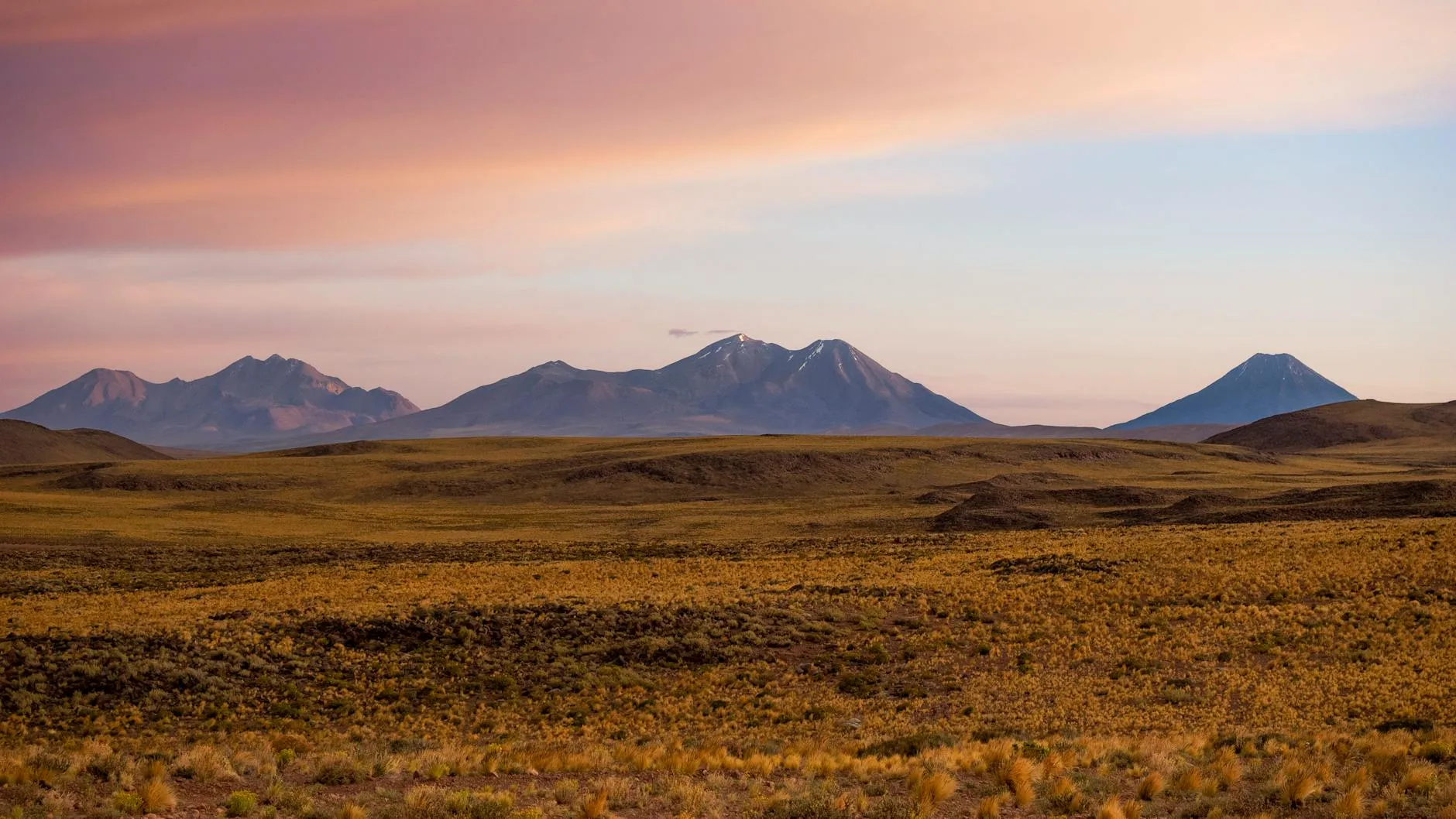
🌞 Atacama and the north (Arica to La Serena)
The driest non-polar desert. Some stations have never recorded rain. San Pedro: 22–28°C days, but nights drop to 5°C (summer) or −5°C (winter) at 2,400 m altitude. The altiplano above 3,500 m gets brief intense summer rains (Jan–Feb) that can wash out roads. Pack layers and respect altitude.
🍷 Central Chile (Santiago, Valparaíso, wine country)
Mediterranean. Hot dry summers (30–33°C), cool wet winters (5–15°C). Santiago's winter air quality is poor. Coastal Valparaíso runs 5–8°C cooler year-round.
🌳 Lakes District (Pucon to Puerto Montt)
Summer (Dec–Mar) is the only reliable window. Warm days (20–24°C), cool nights. Winter is famously wet. Valdivia gets 2,500 mm annually. Chiloé stays foggy even in summer.
💨 Patagonia (Carretera Austral and south)
Wind-dominated. Even in midsummer, Torres del Paine rarely exceeds 18°C. Nights drop to 3–5°C. Sustained gusts of 80–100 km/h can knock hikers off-balance. Rain possible any day. Most refugios close May–October. Plan for mid-November to mid-April only.
⚠️ Altitude in the Atacama
San Pedro de Atacama sits at 2,400 m, but day trips reach 4,300–4,800 m (El Tatio geysers, altiplano lagoons). Altitude sickness is common. Spend at least one full day acclimatising in San Pedro before heading above 4,000 m. Drink coca tea, avoid alcohol the first evening, and carry ibuprofen. If symptoms worsen (severe headache, confusion), descend immediately.
⚠️ Patagonia booking lead time
Refugios and campsites on the W and O Treks in Torres del Paine sell out 6–9 months in advance, especially for January slots. Book the moment reservations open (typically April–May for the following season). Ferries on the Navimag/Tabsa routes through the fjords also fill up. Reserve 3+ months out.
Seismology and volcanoes
Chile is the most seismically active country on Earth. The 1960 Valdivia earthquake (magnitude 9.5) remains the strongest ever recorded. The country contains roughly 500 volcanoes, 90 of which are considered active. For travellers this means accessible volcano climbs. Volcán Villarrica near Pucon erupts frequently enough to have a permanent red-glow crater, yet guided summit hikes run daily in summer. Osorno, Llaima, Calbuco and Lascar are other active cones that shape the landscape. Earthquakes are part of daily life. Chilean building codes are among the strictest in the world, and locals are well-practised. Follow standard earthquake protocol. Move away from glass, shelter under sturdy furniture, do not use lifts.
Seasons & Temperatures
🌟 December – February (high summer)
The only window when all of Chile is open. Patagonia in full swing, Lakes District warm, Santiago hot, Atacama dry. But domestic tourism peaks. Chileans take January off. Torres del Paine refugios book 6–9 months ahead. Prices rise 30–50%. Late November and early December offer identical conditions with half the crowds.
🍂 March – May (autumn)
Most underrated window. 🍷 March is vendimia (harvest) in wine country. Vineyards turn gold. Patagonia accessible into mid-April with autumn colours. Santiago comfortable (22°C). Services in remote Patagonia close from late March. Chiloe gets rainier.
⛄ June – August (winter)
Patagonia closes. But ski season opens. Valle Nevado, Portillo, Nevados de Chillan all within 2–3 hours of Santiago. Atacama runs year-round but nights hit −10°C at altitude. Santiago air quality poor. Budget-friendly overall.
🌸 September – November (spring)
Patagonia reopens mid-October. November is excellent. Long days, wildflowers, calving glaciers, fewer crowds. Atacama at its mildest. Santiago in full bloom. Second-best all-Chile window after March.
Average Temperatures
Monthly average highs and lows (°C) for the main destinations. Chile’s seasons are reversed from the Northern Hemisphere. January is high summer, July is mid-winter.
| Location | Jan (high/low) | Apr | Jul | Oct | Rainfall pattern |
|---|
| Santiago | 30 / 13 | 22 / 8 | 14 / 3 | 21 / 7 | Dry summers; light winter rain (May–Aug) |
| Valparaíso | 23 / 14 | 20 / 12 | 14 / 8 | 17 / 10 | Coastal fog year-round; light winter rain |
| San Pedro de Atacama | 26 / 8 | 24 / 3 | 21 / −3 | 25 / 4 | Almost no rain; brief altiplano storms Jan–Feb |
| Pucon (Lakes) | 24 / 8 | 16 / 5 | 9 / 1 | 16 / 4 | Very wet May–Sep; dry Dec–Mar |
| Puerto Varas | 22 / 9 | 14 / 6 | 8 / 2 | 14 / 5 | Heavy year-round rain; least Jan–Feb |
| Punta Arenas | 14 / 7 | 10 / 3 | 4 / −1 | 11 / 2 | Wind dominates; rain spread thinly year-round |
| Torres del Paine | 17 / 5 | 10 / 1 | 3 / −4 | 11 / 0 | Variable; expect rain, sun and wind any day |
| Easter Island | 27 / 19 | 25 / 18 | 22 / 15 | 23 / 16 | Subtropical; wettest Apr–Jun, driest Sep–Oct |
Wind, not temperature, is the practical concern in Patagonia. A 12°C day with sustained 80 km/h wind feels like single digits. Pack a serious wind-and-waterproof shell for any Patagonia trip regardless of season.