Alpine peaks, pristine lakes, scenic trains, and four-language precision
EuropeAlpine ParadiseScenic TrainsFour Languages
Overview & Why Visit Switzerland
📍 Switzerland is a small, mountainous, multilingual country that has spent the last two hundred years quietly becoming the standard against which every other functional society is measured. 8.9 million people in 41,285 km². The Alps cover 60% of it. Four official languages coexist in 26 fiercely autonomous cantons. 🚃 The rail network is the densest in the world, runs to the second, and takes you from Zurich to a car-free alpine village at 1,800 metres without a single transfer that feels rushed. 🏔 The Matterhorn, the Jungfraujoch, Chapel Bridge in Lucerne, the arcades of Bern, chocolate, cheese, watches, banking secrecy, direct democracy, and trains that apologise for being 30 seconds late. All of it is real.
Travel Style
Switzerland is one of the easiest countries in Europe to travel independently and one of the most expensive. Trains, buses, boats, and cable cars all run on integrated timetables and accept the same tickets. The Swiss Travel Pass (CHF 232–429) unlocks the entire national transport network plus 500+ museums. The Half Fare Card (CHF 120 for a month) halves everything and pays for itself in two mountain excursions. English is widely spoken in tourist areas. Budget travellers manage on CHF 110/day. Mid-range comfort sits around CHF 200/day.
Key Facts
Area: 41,285 km² Currency: Swiss Franc (CHF), not Euro Languages: German 62%, French 23%, Italian 8%, Romansh 0.5% Capital: Bern (Zurich is the largest city) Population: ~8.9 million Time zone: CET (UTC+1, CEST in summer) Plugs: Type J (Swiss 3-pin); Type C fits most sockets
Best For
Mountain lovers, hikers, train enthusiasts, cheese and chocolate fanatics, scenic road-trippers, ski touring, and anyone who values punctuality and quiet efficiency. Switzerland is also an ideal Central Europe hub – Zurich to Milan is 3.5 hours, Zurich to Munich 4 hours, Geneva to Lyon 2 hours by direct train.
Not Ideal For
Shoestring budgets, nightlife hunters, beach seekers, and anyone allergic to rules. A Big Mac costs CHF 7.50. Restaurants close at 22:00 in most cities. Sunday means everything is shut. If you need chaos and colour and a cheap kebab at 3 AM, this is not your country. If you want the Alps done right, it is unbeatable.
Map of Switzerland
Reading the map: Red dots mark major cities, the red ring marks Bern (federal capital). Gold diamonds highlight key sights and attractions. Blue polylines and ellipses show the main rivers and lakes. Region names appear in italic capitals across the country. Switzerland is remarkably compact – roughly 350 km east–west and 220 km north–south – but alpine terrain means travel takes longer than the map suggests. Zurich to Zermatt is 200 km in a straight line and 3.5 hours by the fastest train.
Best Time to Visit
🌡 Switzerland has a temperate climate that changes dramatically with altitude. ☀ Zurich at 400 m can be 25°C while Jungfraujoch at 3,454 m sits below zero on the same day. 🏔 The best months for hiking, lake swimming, and alpine excursions are June through September. The best months for skiing are January through March. May and October are quiet, cheaper, and beautiful, but expect some high-altitude closures.
Month-by-Month Overview
Month
Season
Best For
Crowds
Prices
Rating
January
Deep winter
Peak ski season, Fasnacht prep
🔴 High (resorts)
🔴 High (resorts)
⭐⭐⭐
February
Winter
Skiing, Basel Fasnacht (Mon after Ash Wed)
🔴 High
🔴 High
⭐⭐⭐
March
Late winter
Spring skiing, early Ticino
🟡 Moderate
🟡 Moderate
⭐⭐⭐
April
Early spring
Blossoms in lowlands, some passes still closed
🟢 Low
🟢 Low
⭐⭐⭐
May
Late spring
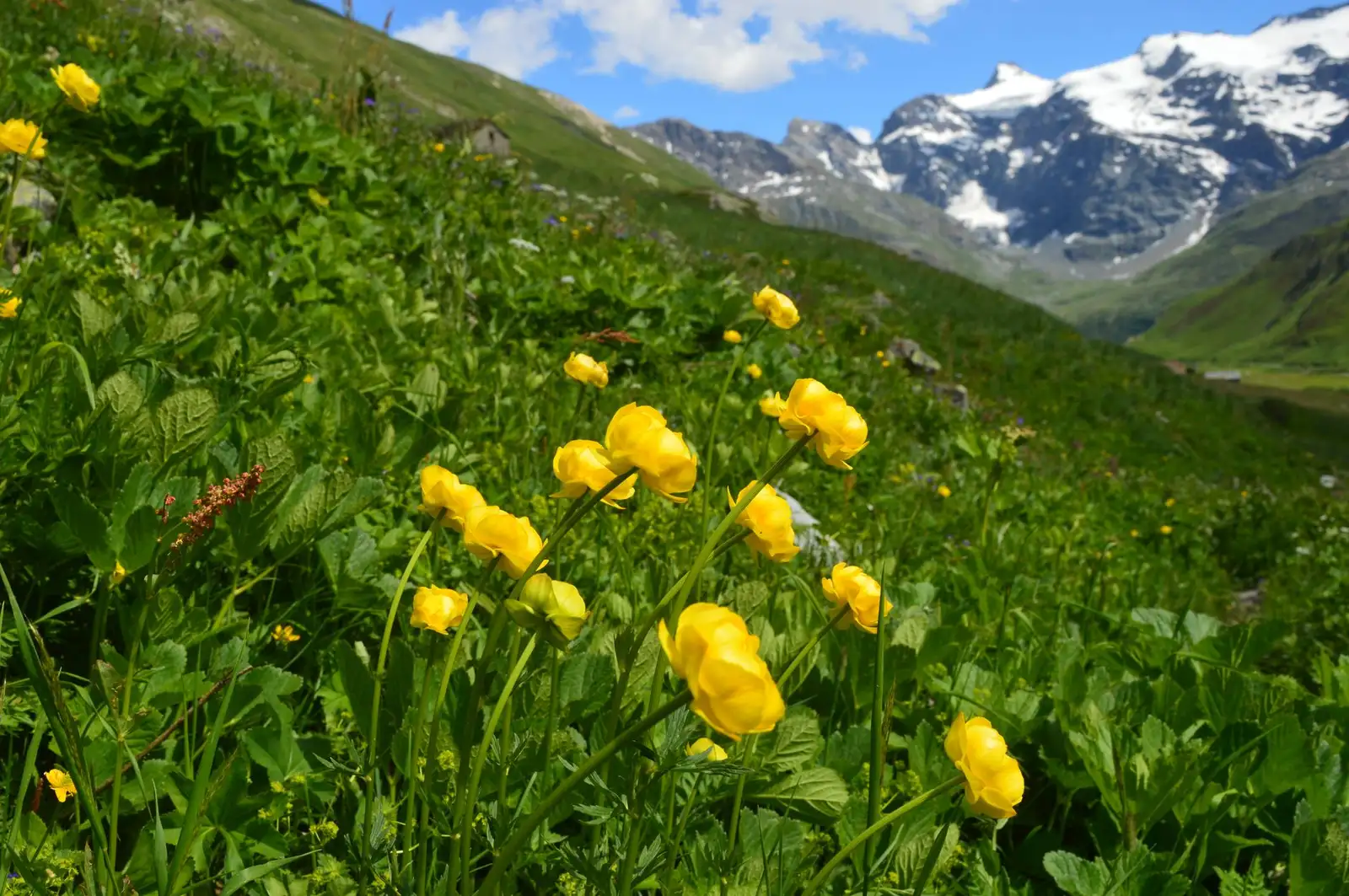
Wildflowers, waterfalls at peak melt
🟡 Moderate
🟡 Moderate
⭐⭐⭐⭐
June
Early summer
Best hiking, long days, warm lakes, passes open
🟡 Moderate
🔴 High
⭐⭐⭐⭐⭐
July
Summer
Peak alpine, Montreux Jazz, lake swimming
🔴 High
🔴 High
⭐⭐⭐⭐⭐
August
High summer
National Day (Aug 1), Locarno Film Festival
🔴 High
🔴 High
⭐⭐⭐⭐⭐
September
Early autumn
Alpabzug, golden light, quieter, still warm
🟡 Moderate
🟡 Moderate
⭐⭐⭐⭐⭐
October
Autumn
Autumn colours, grape harvest, quiet trails
🟢 Low
🟡 Moderate
⭐⭐⭐⭐
November
Late autumn
Zibelemaerit Bern. Grey elsewhere
🟢 Low
🟢 Low
⭐⭐
December
Early winter
Christmas markets (Basel!), ski season starts, Escalade Geneva
🔴 High (resorts)
🔴 High (resorts)
⭐⭐⭐⭐
Sweet spot: Late June through mid-September for anyone who wants the classic postcard experience. All mountain railways are running, cable cars are open, high-altitude trails are snow-free, and lake swimming is glorious. September in particular offers the best light, thinner crowds, and cows descending from the alpine pastures with flower crowns. For skiing, aim for late January to early March when snow is reliable but the peak-season pricing has eased slightly. Always check MeteoSwiss and mountain webcams the night before an expensive excursion – there is no point paying CHF 240 for Jungfraujoch in fog.
Holidays & Festivals
🎊 Swiss holidays come in three flavours: federal holidays (only a handful), cantonal holidays (each of the 26 cantons decides its own), and cultural celebrations (Fasnacht, Sechselaeuten, Escalade, Alpabzug). 💡 The ones worth planning your trip around are Basel Fasnacht, Swiss National Day, the Alpabzug cattle descent, and the Christmas markets. Sechselaeuten in Zurich is a delightfully weird bonus if you happen to be there in April.
Holidays, Festivals & Events
Date
Event
Where
What to Expect
Type
Jan 1
New Year’s Day
Nationwide
Fireworks on Dec 31 over every major lake. Quiet the following day, most things closed
Holiday
Feb/Mar (varies)
Fasnacht (Basel)
Basel
Starts 04:00 Monday after Ash Wednesday with Morgestraich (all lights off, lantern processions, fifes and drums). Three days, UNESCO Intangible Heritage. Lucerne Fasnacht is similar with a different character
Must See
Mar/Apr (varies)
Easter (Ostern/Paques)
Nationwide
Good Friday + Easter Monday public holidays. Shops closed. Book accommodation ahead
Holiday
3rd Mon April
Sechselaeuten
Zurich
Guild parades in historical costume. At 18:00 the Boeoegg (snowman effigy) is burned. Faster the head explodes, better the summer – supposedly
Must See
May 14, 2026
Ascension Day
Nationwide
Public holiday, long weekend, mountain hotels fill up
Holiday
May 24-25, 2026
Whit Sunday & Monday
Nationwide
Public holiday. Peak spring travel demand
Holiday
Jul 4-19, 2026
Montreux Jazz Festival
Montreux
Two weeks of world-class music on Lake Geneva. Free lakeside stages and paid concerts. Book ahead
Must See
Aug 1
Swiss National Day
Nationwide
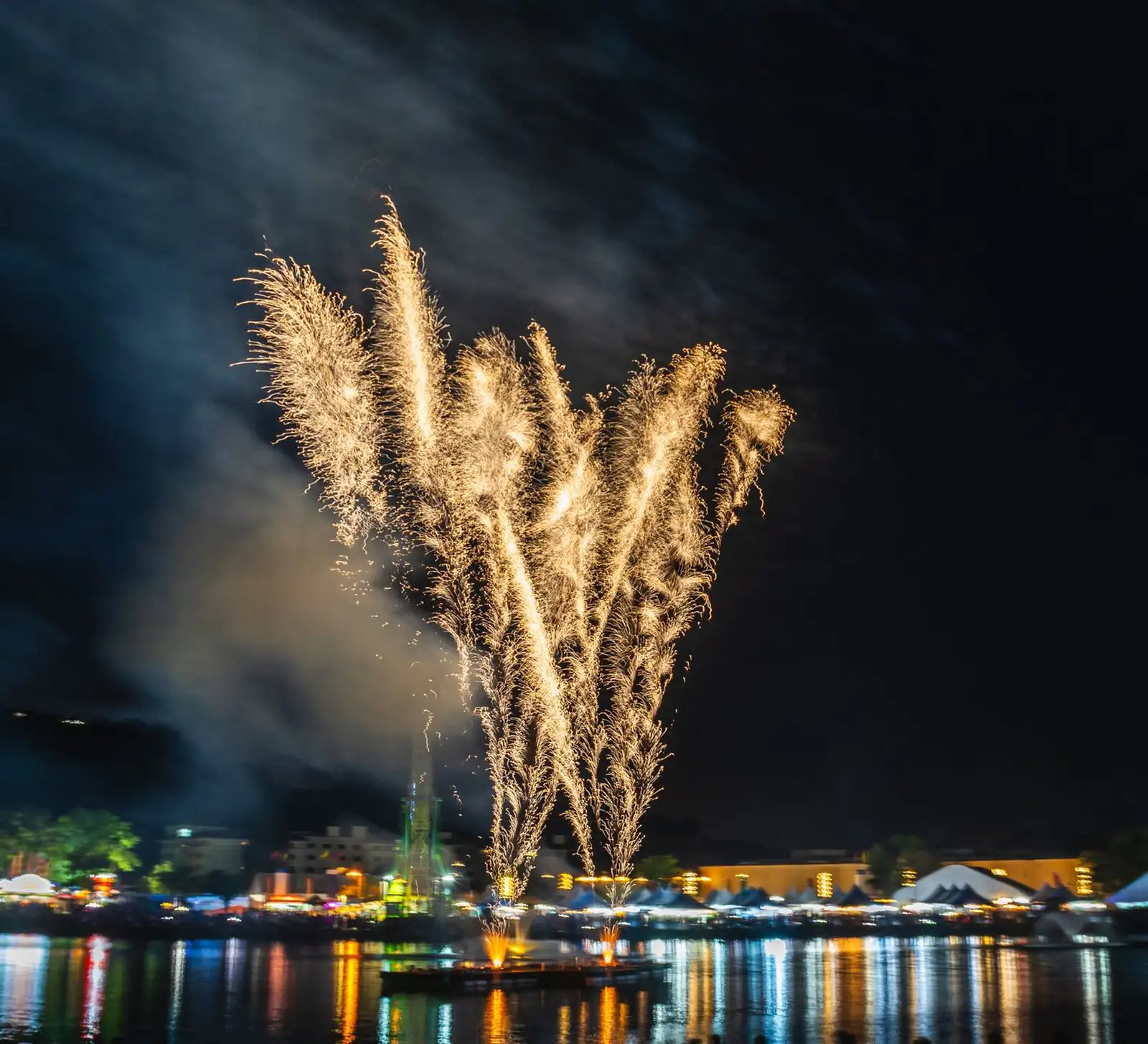
Fireworks over every lake, bonfires on mountain peaks, farm brunches, patriotic speeches. The whole country celebrates. Book farm brunches weeks ahead
Must See
Aug (2 weeks)
Locarno Film Festival
Locarno (Ticino)
Open-air cinema on Piazza Grande with 8,000 seats. One of Europe’s major film festivals
Cultural
2nd Sat August
Street Parade
Zurich
One million people, techno and house on love-mobiles rolling through the city. Europe’s largest techno parade
Cultural
Sep-Oct (varies)
Alpabzug / Desalpe
Appenzell, Justistal, Charmey
Cows descend from summer pastures decorated with flowers and huge bells. Farmer processions, cheese, folk music. Deeply Swiss
Cultural
4th Mon Nov
Zibelemaerit (Onion Market)
Bern
Massive traditional market from 04:00. 50+ tonnes of onions braided into ropes. Confetti battles, Gluehwein, onion tarts
Cultural
Late Nov – Dec 24
Christmas Markets
Basel, Bern, Zurich, Montreux
Basel’s market is one of Europe’s finest. Montreux’s lakeside market with a flying Santa above the promenade is a fairytale
Must See
Dec 11-12
Escalade
Geneva
Geneva celebrates repelling the 1602 Savoyard attack. Chocolate cauldrons smashed with a fist, historical re-enactment, torch-lit parade through the Old Town
Cultural
Dec 25-26
Christmas & St. Stephen’s Day
Nationwide
Two days of public holiday. Shops closed. Ski resorts extremely full
Holiday
Cantonal holiday warning: Switzerland has almost no nationally observed public holidays beyond Aug 1 and Christmas. Each canton decides its own calendar. Some cantons observe Corpus Christi, Assumption Day (Aug 15), All Saints’ Day (Nov 1), Immaculate Conception (Dec 8), and Berchtoldstag (Jan 2). Catholic cantons observe more than Protestant ones. If a specific date matters, check the canton you will be in. Zurich, Bern, Geneva, and Basel each have subtly different rules.
Regions
🏔 Switzerland has 26 cantons but tourism officially groups them into 7 regions, plus a few worthwhile mentions on the fringes. 💡 Most visitors bounce between Zurich, Interlaken (Bernese Oberland), and Zermatt (Valais). That covers the greatest hits but skips half the country. Ticino feels Italian. Appenzell feels 200 years old. Graubuenden speaks Romansh. Get out of the corridor.
🏙 Zurich Region
Zurich, Winterthur, Rapperswil, Rhine Falls (Schaffhausen). The financial hub and largest city (1.5M metro), but surprisingly liveable. Old Town along the Limmat, Kunsthaus, Bahnhofstrasse, lake swimming, Uetliberg for city panorama. Winterthur has more art museums per capita than almost anywhere in the world. Rhine Falls day trip is essential.
🛑 Lucerne & Lake Lucerne
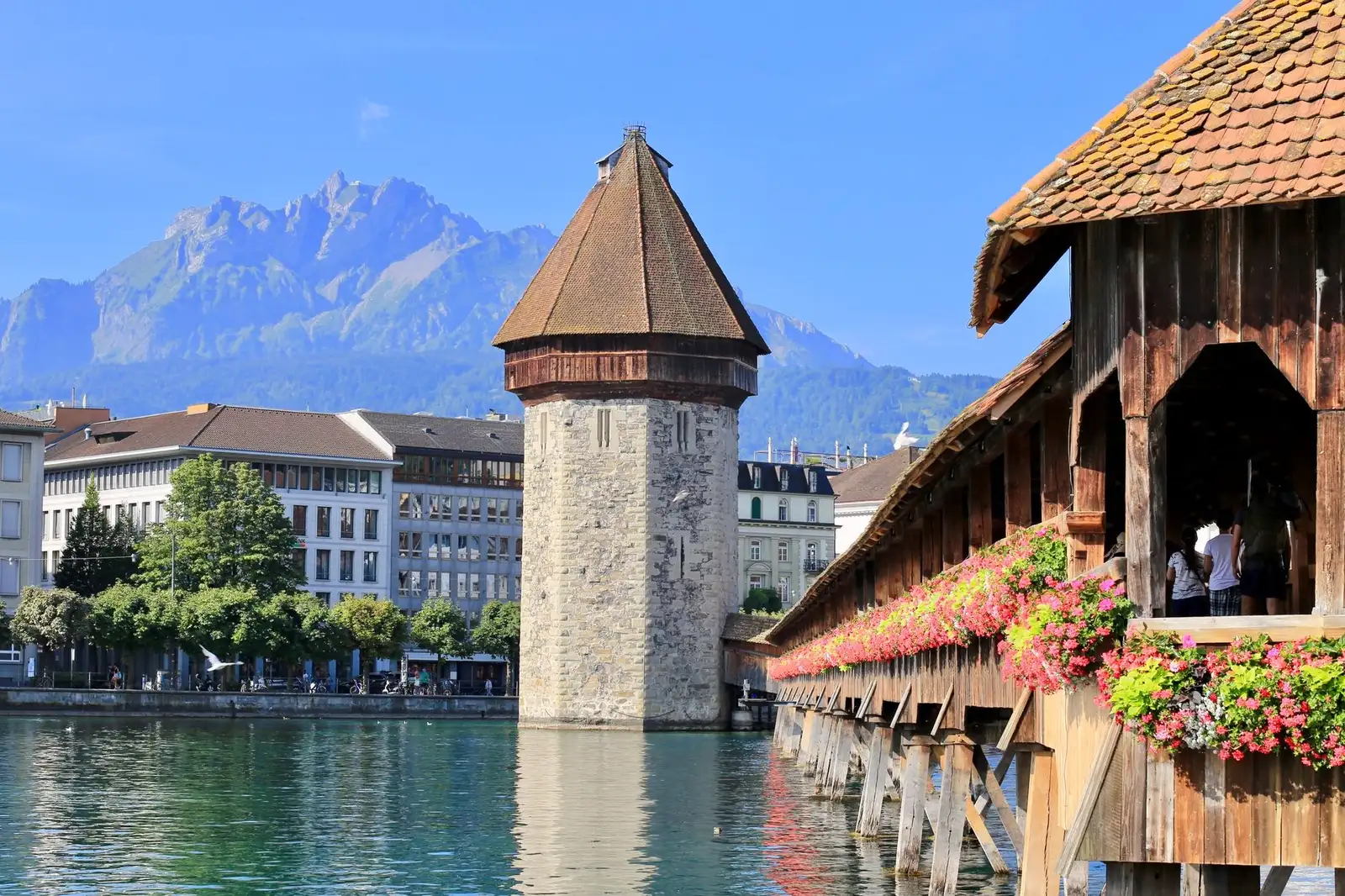
Lucerne, Rigi, Pilatus, Engelberg/Titlis, Stanserhorn. Postcard Switzerland. The Chapel Bridge (Kapellbruecke, 1333) is the oldest covered wooden bridge in Europe. Steamer cruises across the lake, cogwheel railway up Pilatus (steepest in the world at 48%), Rigi sunrise. The gateway to central Switzerland.
🏔 Bernese Oberland
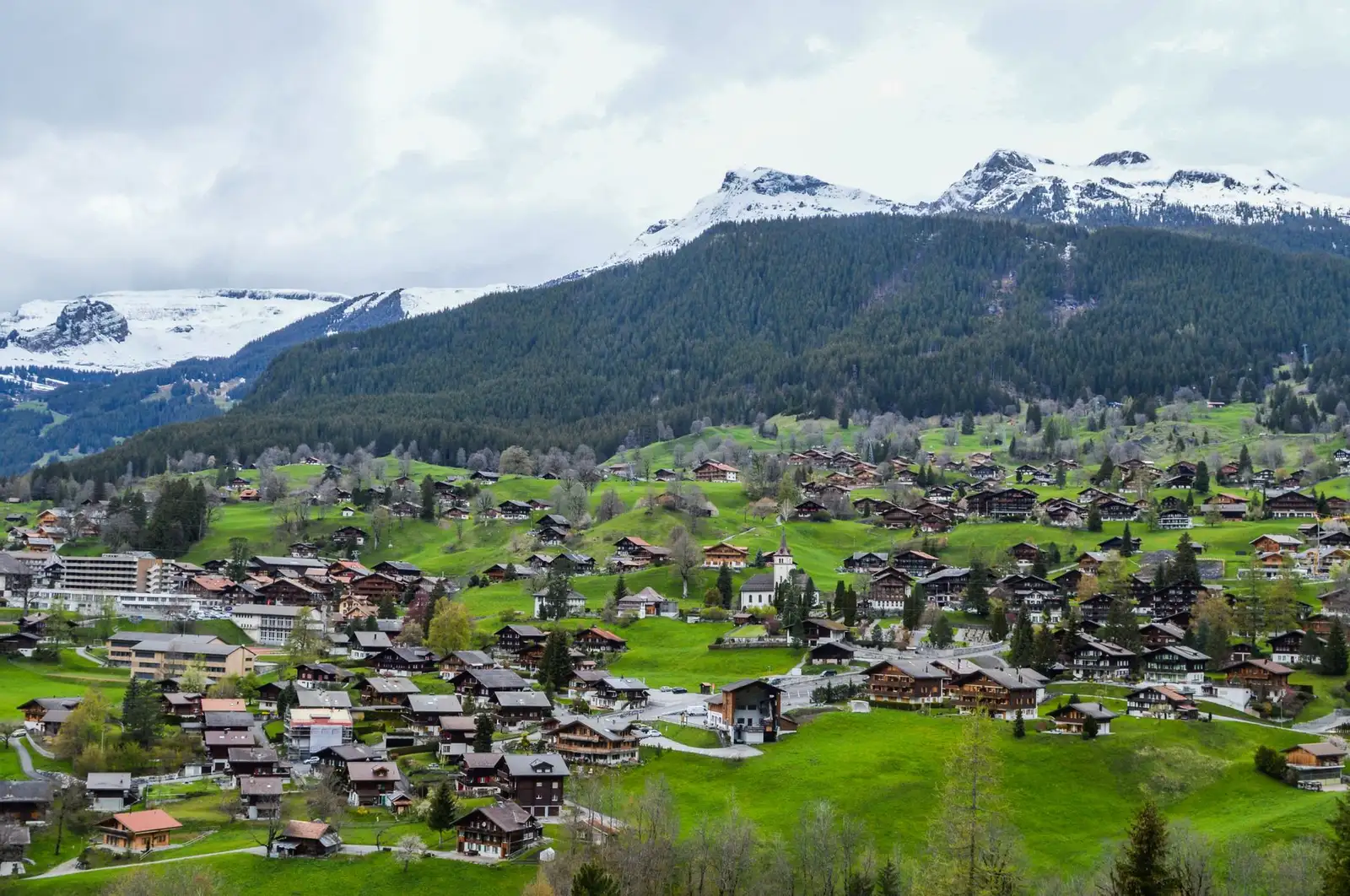
Interlaken, Jungfraujoch, Grindelwald, Lauterbrunnen, Muerren, Thun, Brienz. The Alps as everyone pictures them. Jungfraujoch (Top of Europe, 3,454 m). Lauterbrunnen Valley with its 72 waterfalls. Grindelwald-First cliff walk. Schilthorn (the Bond peak). Paragliding capital of the country from Interlaken.
🏯 Bern Region
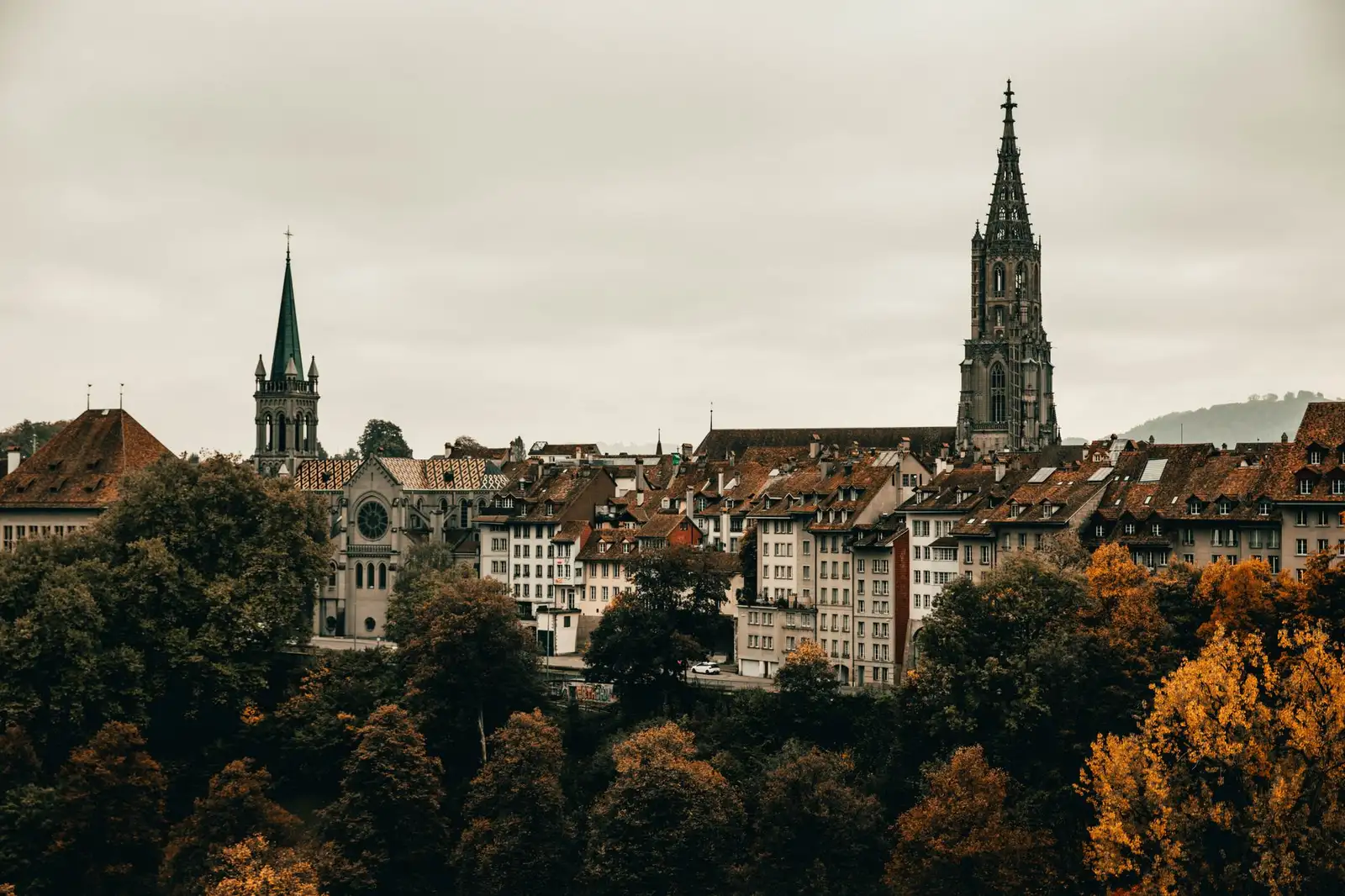
Bern (federal capital), Emmental, Solothurn. Bern’s UNESCO Old Town: Zytglogge clock tower, Muenster cathedral, 6 km of covered arcades (Lauben), live bears in the BaerenPark, Aare swimming in summer. Emmental rolls with green cheese-country hills. Solothurn is a Baroque gem with 11 churches for its 11 cantons.
⛰ Valais
Zermatt/Matterhorn, Saas Fee, Verbier, Crans-Montana, Aletsch Glacier, Sion. The Matterhorn (4,478 m). Zermatt is car-free. The Aletsch Glacier at 23 km is the longest in the Alps and UNESCO-listed. Verbier for skiing and nightlife. 300 days of sunshine per year. Some of Europe’s highest vineyards. Sion has twin hilltop castles.
🏔 Graubuenden (Grisons)
St. Moritz, Davos, Engadine, Swiss National Park, Chur. The largest and easternmost canton. Birthplace of winter tourism (St. Moritz, 1864). Bernina Express and Glacier Express both start here. The country’s only national park is in the Engadine. Romansh is still spoken in remote valleys. 322 days of sunshine per year in the Engadine.
🌴 Ticino
Lugano, Locarno, Bellinzona, Ascona, Val Verzasca. Italian-speaking Switzerland. Palm trees, piazzas, gelato, and a Mediterranean climate south of the Alps. Lugano wraps around its lake. Bellinzona’s three castles are UNESCO. Val Verzasca has emerald river pools and the 220 m GoldenEye bungee jump. Grotto restaurants serve polenta and braised meats under stone vaults.
🎊 Geneva & Lake Geneva
Geneva, Lausanne, Montreux, Vevey, Lavaux vineyards. French-speaking western Switzerland. Geneva has the UN, Red Cross, Jet d’Eau (140 m water plume), and CERN. Lausanne has the Olympic Museum. Montreux hosts the Jazz Festival and looks out at Chateau de Chillon, the most-visited castle in Switzerland. The Lavaux vineyard terraces (UNESCO) cover the northern lake shore.
🎨 Basel & Eastern Switzerland
Basel, St. Gallen, Appenzell, Schaffhausen. Basel is the art capital – Art Basel, Fondation Beyeler, Kunstmuseum. Rhine swimming in summer. St. Gallen’s Abbey Library (UNESCO) is a Baroque masterpiece with 170,000 volumes. Appenzell is Switzerland’s most traditional region with painted houses and open-air democracy. Rhine Falls is the largest plain waterfall in Europe.
⌛ Jura & Three-Lakes
Neuchatel, Biel/Bienne, La Chaux-de-Fonds, Creux du Van. The watchmaking heartland. La Chaux-de-Fonds is a UNESCO city of watchmaking and Le Corbusier’s hometown. Creux du Van is a 160 m natural rock amphitheatre with resident ibex on the rim. Rolling green Jura hills, cross-country skiing, and quieter than the Alps.
Beyond the postcard trio: If you have three days you go Zurich, Lucerne, Interlaken. If you have a week you add Zermatt and Geneva/Lausanne. If you have two weeks, do everyone a favour and include Ticino, Appenzell, or Graubuenden. They feel like different countries. Ticino gives you Italy without leaving Switzerland. Appenzell gives you the pre-industrial Alps.
Top Sightseeing
🎨 Switzerland has 13 UNESCO World Heritage Sites and roughly a thousand postcard-perfect villages. 💡 If you buy the Swiss Travel Pass, entry to more than 500 museums is included and mountain railways are discounted 25-50%. If you plan on visiting Jungfraujoch, the Matterhorn Glacier Paradise, or both, budget CHF 200-350 per excursion regardless of any pass.
🏔 Matterhorn & Zermatt
The most photographed mountain in the world (4,478 m). Zermatt is car-free. Ride the Gornergrat cogwheel railway (CHF 100 return) for the postcard view, or the Matterhorn Glacier Paradise cable car (CHF 120 return) to Europe’s highest lift station at 3,883 m. Half-price with the Half Fare Card.
❄️ Jungfraujoch (Top of Europe)
The highest railway station in Europe at 3,454 m. Sphinx observatory, Aletsch Glacier viewpoint, Ice Palace. CHF 240 return from Interlaken, roughly CHF 192 with Swiss Travel Pass discount. Go on the first clear day – on a foggy day you are paying to see a wall of white.
🛑 Chapel Bridge (Lucerne)
Oldest covered wooden bridge in Europe, built 1333. The Water Tower (Wasserturm) and painted panels under the roof depict Swiss history. Free. Walk it at dawn to have it to yourself. Pair with the Lion Monument and the ramparts of the Musegg Wall.
🏭 Old Town Bern (UNESCO)
Medieval Old Town on a peninsula in the Aare. Zytglogge astronomical clock (chimes every hour with a mechanical show). 6 km of covered arcades (Lauben). 100+ fountains, most from the 16th century. Muenster tower climb (CHF 5) gives the best city view. Einstein Museum. BaerenPark bears below the bridge.
🏰 Chateau de Chillon
Island castle on Lake Geneva near Montreux. Nearly 1,000 years old. Lord Byron carved his name here. CHF 13.50 entry. Arrive by paddle-steamer from Montreux for the classic approach. The most-visited historic building in Switzerland.
💦 Rhine Falls (Schaffhausen)
Largest plain waterfall in Europe. 150 m wide, 23 m drop, 600 m³/s in June. Take the boat (CHF 20) to the central rock. Train from Zurich in 45 minutes. Absolutely deafening at peak melt.
💦 Lauterbrunnen Valley
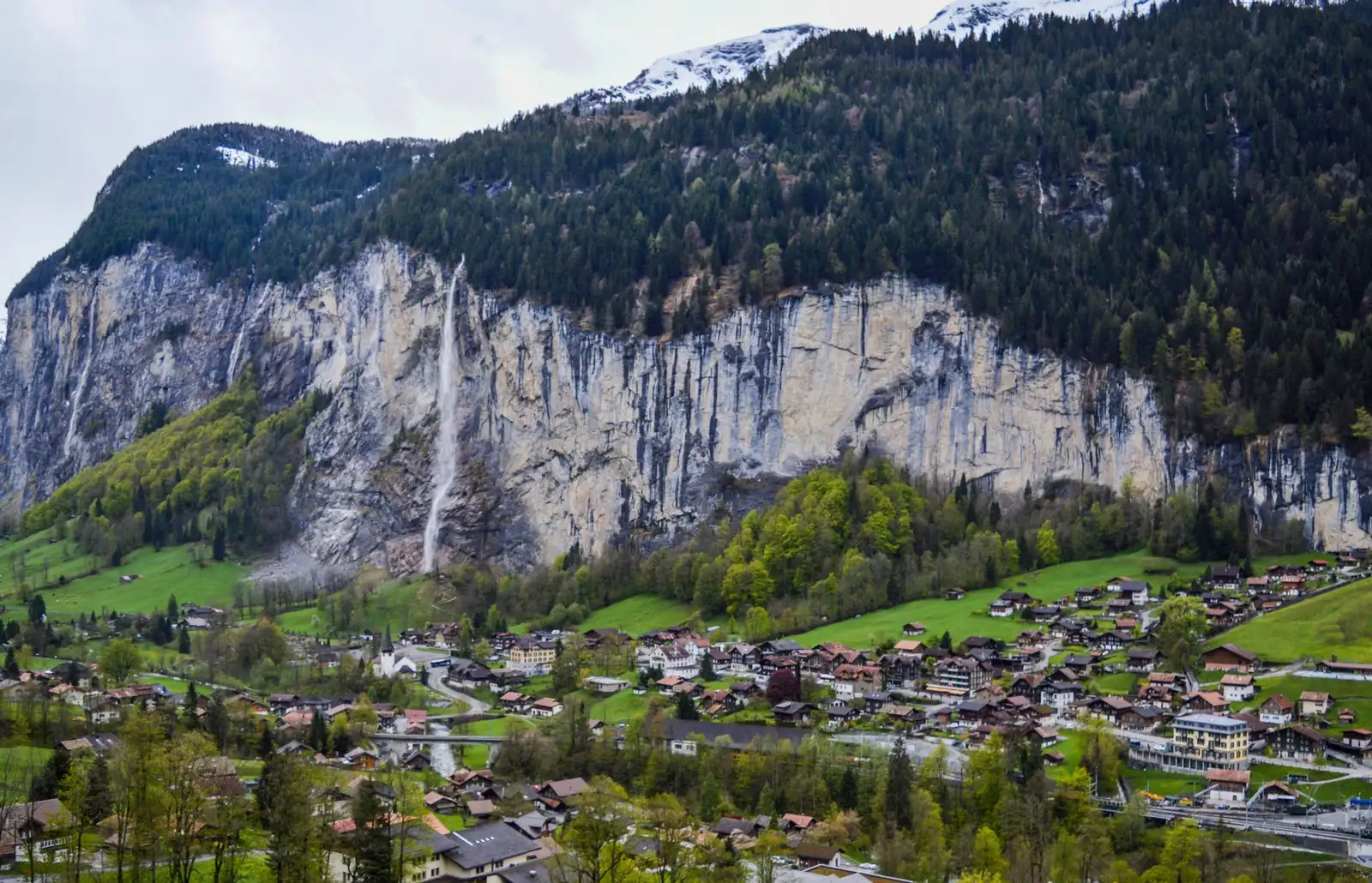
72 waterfalls in a single U-shaped glacial valley. Staubbach Falls (300 m, free viewpoint). Truemmelbach Falls (10 waterfalls inside the mountain, accessed by tunnel and elevator, CHF 15). Base for Schilthorn, Muerren, and Wengen.
🚊 Glacier Express
Eight-hour scenic train from Zermatt to St. Moritz. 291 bridges, 91 tunnels, over the Oberalp Pass (2,033 m). Panoramic windows. CHF 160-260 for the ride plus CHF 49 mandatory seat reservation. Fully covered by Swiss Travel Pass (reservation still needed). Book well ahead in summer.
🚊 Bernina Express (UNESCO)
UNESCO-listed rail route from Chur/St. Moritz to Tirano, Italy. The Landwasser Viaduct is iconic. Panorama coaches with huge windows. CHF 70-100 + CHF 30-40 reservation. Covered by Swiss Travel Pass. The most spectacular budget rail experience in the Alps.
🏔 Aletsch Glacier
Longest glacier in the Alps at 23 km. UNESCO. View it from the Eggishorn (cable car from Fiesch, CHF 62 return) or walk the Aletsch Panoramaweg from Riederalp (9 km, easy, spectacular). The glacier is retreating fast – visit while it is still recognisable.
🍴 Swiss culture runs on punctuality, quiet Sundays, direct democracy, and the unspoken understanding that everyone is watching. 💡 The food reputation is limited to cheese and chocolate, which is unfair. Fondue and raclette are iconic, but the everyday food scene – roesti, aelplermagronen, Zurich veal with cream sauce, lakeside grilled perch, Ticinese polenta – is much broader than the tourist menus suggest. Every region has its own specialities. Every one is worth eating.
Social Norms
Swiss culture has a handful of unwritten rules that visitors often trip over. None of them are difficult once you know they exist.
Punctuality. Trains depart on the second. Meetings start on the minute. Being 5 minutes late is noticed. Being 15 minutes late without a message is genuinely rude. If your restaurant reservation is at 19:00, the table is ready at 19:00.
Sunday quiet (Sonntagsruhe). Almost all shops close on Sundays. No mowing the lawn, no loud music, no using the washing machine in shared buildings. Recycling on the wrong day gets you a note from a neighbour. These rules are enforced socially and sometimes legally.
Language matters. Do not assume everyone speaks German. In Geneva or Lausanne, greet in French (“bonjour”). In Lugano, Italian (“buongiorno”). In Zurich or Bern, Swiss German (“gruezi”). Getting the greeting right is worth more than fluent English. Swiss German is very different from standard German. Do not try to imitate it.
Greetings vary. In German Switzerland: handshake and “gruezi.” In French Switzerland: three cheek kisses (right-left-right) with people you know. In Ticino: two kisses. Get it wrong and everyone just laughs about it.
Modesty about money. Wealth is common but showing it off is frowned upon. Never ask what someone earns or pays in rent. The wealthiest banker in your carriage is wearing plain clothes and reading the newspaper.
Direct democracy is real. The Swiss vote on referenda four times a year. Political literacy is high. If you are having dinner with locals, expect the current ballot topics to come up.
Food & Drink
🧀 Fondue
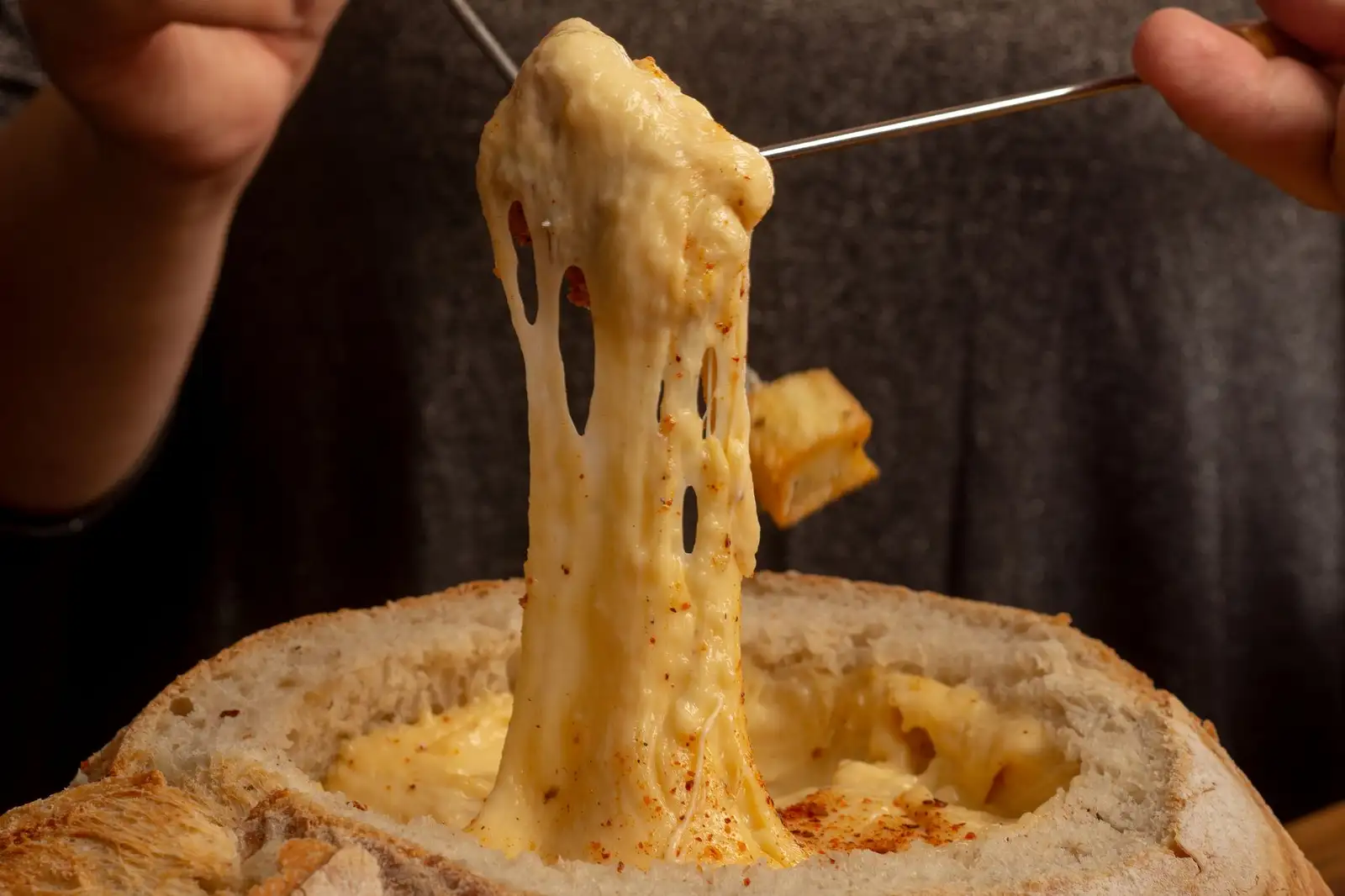
Melted cheese – typically a Gruyere and Vacherin (or Emmental) blend – kept warm in a caquelon over a spirit burner. Cubes of stale bread on long forks. CHF 25-40 per person. Traditionally a winter dish. Drop your bread into the pot and you owe the table a round of Kirsch. Never mix with cold water – drink hot tea or white wine.
🧀 Raclette
Half a wheel of cheese melted under a heat source and scraped over boiled potatoes, cornichons, pickled onions, and dried alpine meat. CHF 30-45 at a restaurant. Every household owns a raclette grill for winter dinners. Filling in a way that fondue only pretends to be.
🍟 Roesti
Crispy shredded-potato pancake, originally a Bernese farmer’s breakfast, now the national side dish. The “Roestigraben” is the cultural divide between German and French Switzerland – roesti is eaten more on the German side. Served with sausages, eggs, cheese, or Zurich veal.
🍲 Zuercher Geschnetzeltes
Sliced veal in a cream and mushroom sauce, served with roesti. Zurich’s signature dish. Best eaten at a Zunfthaus (historic guildhall restaurant) in the Old Town. CHF 35-45 for a proper plate. Rich, silky, and worth every franc.
🍝 Aelplermagronen
Alpine herder’s macaroni: pasta and potatoes cooked together, folded with cream and cheese, topped with crispy fried onions, served with applesauce on the side. Sounds strange, tastes brilliant. Standard mountain-hut food. CHF 22-30.
🍫 Chocolate
Lindt, Spruengli, Toblerone, Cailler, Frey. Lindt runs a factory museum near Zurich (CHF 15, endless samples). Spruengli sells the beloved Luxemburgerli macarons on Bahnhofstrasse. Broc (Fribourg region) has the Cailler factory tour. Buy from Coop/Migros for daily eating, from Spruengli for gifts.
🍷 Swiss Wine
Switzerland produces excellent wine and exports almost none (98% drunk domestically). Valais leads with Fendant/Chasselas white and Cornalin red. Lavaux (UNESCO terraces on Lake Geneva) makes crisp Chasselas. Ticino produces Merlot. Always ask for the local wine wherever you are eating. It will be good and you will not have heard of it.
🍺 Beer, Rivella & Absinthe
Mainstream beers: Feldschloesschen, Appenzeller, Cardinal. Growing craft scene in Zurich and Basel. Rivella is Switzerland’s own soft drink, made from milk whey – sweet, slightly cheesy, weirdly refreshing. Absinthe comes from Val-de-Travers in Neuchatel where it was banned until 2005. Distillery tours available.
Apero culture: In French Switzerland especially, the apero – early-evening drinks with cheese, cured meats, and olives – is a social institution similar to the Italian aperitivo. If someone invites you for “un apero,” go. Conversation topics: local politics, holidays, mountains, and how expensive everything is. Nobody will discuss their salary. Everyone will discuss the current federal referendum.
Wildlife & Nature
Switzerland’s Alpine landscapes, glacial valleys, and extensive protected areas harbour a wealth of mountain-adapted wildlife. Strict hunting laws and a deep cultural respect for nature have allowed many species to flourish. The country’s compact size means you can encounter ibex, marmots, and golden eagles within a few hours of major cities.
Alpine Ibex
Where: Swiss National Park (Engadin), Bernese Oberland, Valais
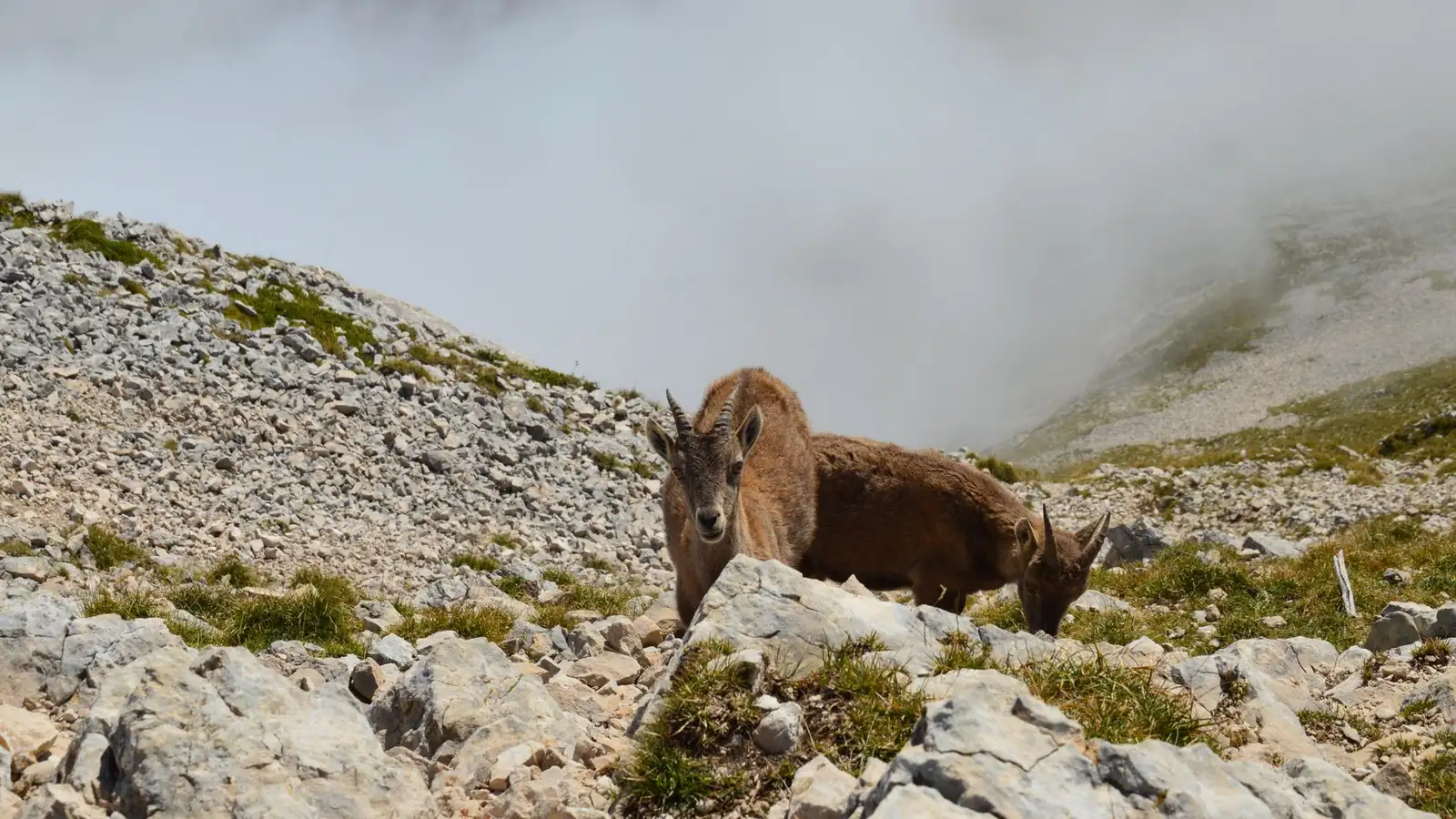
Switzerland’s most iconic mountain animal, with massive backward-curving horns reaching 1 m. The Swiss National Park in the Engadin Valley hosts a healthy population. Ibex were nearly extinct by the 19th century but recovered through strict protection. They can climb near-vertical rock faces and are often seen on cliff ledges above 2,000 m.
Alpine Marmot
Where: Above 1,500 m throughout the Alps
These large ground squirrels (up to 8 kg) are the Alps’ most commonly encountered mammals. Their piercing alarm whistle is the soundtrack of Alpine summers. They live in family groups of 10–20 in extensive burrow systems and hibernate for up to 6 months. Best seen sunning on rocks in the morning or late afternoon.
Bearded Vulture (Lammergeier)
Where: Swiss National Park, Engadin, Bernese Alps
The largest bird of prey in Europe, with a wingspan up to 2.8 m. Only about 70 pairs breed in Switzerland. They are bone-eaters — 70% of their diet is bone, which they drop from height onto rocks to crack open. The orange colour of their breast feathers comes from bathing in iron-rich mineral springs.
Golden Eagle
Where: Swiss National Park, Jura Mountains, Valais
Switzerland hosts around 300 breeding pairs of golden eagles, making it one of the best countries in Europe to see them. They build enormous nests on cliff faces, some used continuously for decades. Their hunting range covers up to 200 km². The Swiss National Park offers guided eagle-watching excursions in summer.
Wildlife watching: The Swiss National Park offers ranger-led wildlife walks (ibex, deer, marmots). Bearded vulture tracking tours run from Engadin. Cable cars to high Alpine stations provide easy access to ibex and marmot habitats. The best time is early morning in summer months.
Activities & Hikes
🏆Looking for the best tours and experiences? Browse our hand-picked recommendations across 17 countries — from skip-the-line museum tickets to sunrise hot air balloon rides.
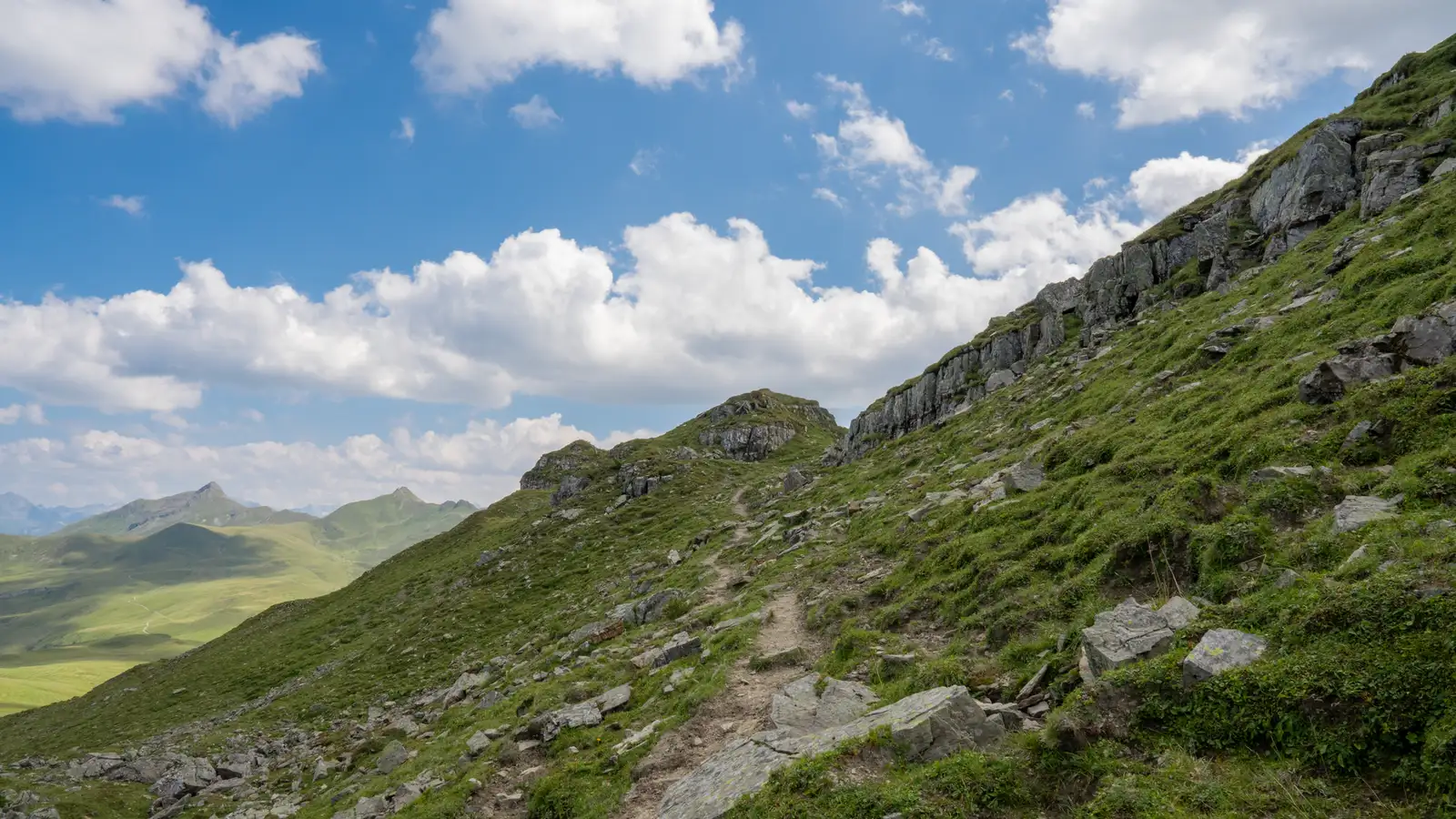
🚶 Switzerland is a country of 65,000 kilometres of signposted hiking trails, 200+ ski resorts, 700+ mountain lifts, and a national obsession with being outside. ✅ Whether you have three hours or three weeks, whether you can walk 5 km or 50 km a day, the trail network already has your route figured out. The yellow signposts show destinations and walking times. Follow them and you cannot get lost.
Signature Hikes
🚶 Five-Lakes Walk (Pizol)
Five alpine lakes in a single loop above Bad Ragaz. 10 km, 4-5 hours, moderate. Cable car up and back. The lakes reflect the peaks like a series of mirrors. Best in July-September when snow is gone. Cable-car return roughly CHF 60.
🚶 Eiger Trail (Grindelwald)
Hike directly beneath the North Face of the Eiger. 6 km one-way from Alpiglen to Eigergletscher station, 2-3 hours, intermediate. Return by train. The North Face looms 1,800 m above you. Best June-October.
🚶 Aletsch Panoramaweg
9 km along the ridge above Europe’s longest glacier, from Riederalp to Bettmeralp. Easy to moderate, 3 hours. Cable cars from Moerel or Betten. The glacier stretches below you the entire walk. UNESCO World Heritage. Roughly CHF 55 return cable-car ticket.
🚶 Haute Route (Chamonix-Zermatt)
~180 km, 12-14 days, hut-to-hut classic. Advanced. Passes over high glaciers, cols above 3,000 m, sleeping in Swiss Alpine Club (SAC) huts. Full experience CHF 1,500-2,500 including huts, food, guide (independent is cheaper if you are technically competent).
Scenic Trains
🚊 Glacier Express
Zermatt to St. Moritz in 8 hours. 291 bridges, 91 tunnels, panorama coaches. 2nd class has the same panoramic windows as 1st, so the view is identical. CHF 160 (2nd) or CHF 268 (1st) plus CHF 49 reservation. Included with Swiss Travel Pass (reservation still required).
🚊 Bernina Express
Chur or St. Moritz to Tirano (Italy), 4 hours. UNESCO route. Landwasser Viaduct, spiral tunnels, Alp Gruem panorama. CHF 66-100 + CHF 32 reservation summer. Continue by bus to Lugano for a full Alps-to-Italian-lakes day.
🚊 GoldenPass Line
Lucerne to Montreux via Interlaken, 5 hours in total across three train segments. New continuous Panoramic service now runs Montreux to Interlaken without change. Covered by Swiss Travel Pass.
🚊 Gotthard Panorama Express
Lucerne to Lugano combining a paddle-steamer down Lake Lucerne with a panorama train through the old Gotthard route. Seasonal (May-October). CHF 145 + reservation. Covered by Swiss Travel Pass.
Winter Sports
🏟 Zermatt
Car-free village at the foot of the Matterhorn. 360 km of pistes across three linked areas, glacier skiing year-round, ski to Cervinia in Italy on a single pass. Day pass CHF 90-100 in high season. Most reliable snow in the Alps.
🏟 Verbier & 4 Vallees
410 km of pistes across four connected valleys. Off-piste mecca. Lively apres-ski. Freeride World Tour venue. Day pass CHF 85-95. Ideal for confident intermediates and above.
🏟 Grindelwald-Wengen-Muerren
Jungfrau ski region. 200+ km, dramatic scenery, family-friendly Grindelwald plus car-free Wengen and Muerren. Home of the Lauberhorn World Cup downhill (January). Day pass CHF 75-85.
Water & Adventure
🌊 Aare River Float (Bern)
A local tradition: put your dry-bag on your back, jump in at Marzili or Eichholz, and float 2-4 km downstream through the city. Free. Current is fast, water is clean and cold. Get out before the weir. Summer only, June-September.
🛸 Paragliding (Interlaken)
Tandem flights with Eiger, Moench, and Jungfrau in view. 15-25 minutes airborne plus takeoff. CHF 180-220. Multiple operators launch from Beatenberg. Safest and most scenic tandem paragliding in Europe.
🏞 Verzasca Dam Bungee
The 220 m jump from Contra Dam in Ticino, made famous by the opening scene of GoldenEye. CHF 255. Still the highest commercial bungee in Europe. Book ahead.
Route Planner
Planning a trip to Switzerland requires consideration of several factors that affect routing, timing, and budget. Visa requirements vary by nationality, domestic transport ranges from modern highways to unpaved mountain roads, and seasonal weather can dramatically alter your experience. The routes below are designed around Switzerland's geography and transport networks, but conditions change — always verify road access, border crossings, and transport schedules before departing.
Before choosing a route, consider: your time frame (a focused one-week trip differs vastly from a three-week exploration), your budget (some routes require domestic flights or private transport), what you want to see (cities, nature, culture, adventure), and seasonal conditions (monsoon, dry season, temperature extremes). Each route is a template — adjust it to fit your style.
🚀
Plan Your Trip with the Travel Planner
Build a personalised itinerary with weather forecasts, safety warnings, visa info, transport options, and cost estimates — all in one report.
We hand-picked the highest-rated hotels, apartments and resorts for your trip — from budget stays to luxury retreats. Filter by country, budget and guest rating.
The essential Switzerland trip. Covers Zurich, Lucerne, the Bernese Oberland, Zermatt, the Lake Geneva region, and Bern. All by public transport. Buy an 8-day Swiss Travel Pass (CHF 389) and everything you need – trains, buses, boats, mountain-railway discounts, museum entries – is one card. Works best May through October, though a version in winter is also excellent for skiers.
You will see roughly 70% of what Switzerland is famous for, focused on the greatest hits. The trip has enough breathing room in each stop that you actually experience the places rather than photographing them from the platform.
Day-by-day itinerary (14 days)
Days 1–2: Zurich & Rhine Falls
Day 1: Arrive at ZRH airport. Train to HB (10 min). Check into accommodation near the Old Town or Zurich West. Walk the Limmat, Grossmuenster, Fraumuenster (Chagall windows). Evening: Niederdorf for dinner.
Day 2: Morning train to Schaffhausen (45 min). Rhine Falls (Europe’s largest by volume). Boat to the central rock. Return to Zurich afternoon. Uetliberg for sunset panorama. Evening: Zurich West district.
Days 3–4: Lucerne & Lake Lucerne
Day 3: Train to Lucerne (45 min). Chapel Bridge, Lion Monument, Musegg Wall. Afternoon: lake steamer to Vitznau. Cogwheel railway up Rigi (Queen of the Mountains). Sunset from the summit. Return to Lucerne by boat.
Day 4: Cogwheel + cable car up Mount Pilatus (world’s steepest cogwheel at 48% gradient). Golden Round Trip. Return by aerial cableway. Evening: KKL Culture Centre or lakeside dinner.
Days 5–7: Interlaken & Jungfrau Region
Day 5: Train to Interlaken (2 h). Base yourself in Interlaken or Lauterbrunnen. Afternoon Harder Kulm funicular for the two-lakes view. Sunset over Thunersee.
Day 6: Jungfraujoch day. Interlaken to Lauterbrunnen to Kleine Scheidegg to Jungfraujoch. CHF 240 return (CHF 192 with Swiss Travel Pass). Go on a clear day. Ice Palace, Sphinx viewpoint, Aletsch Glacier.
Day 7: Lauterbrunnen Valley. Staubbach Falls (free), Truemmelbach Falls (CHF 15, waterfalls inside the mountain). Cable car up to Muerren. Optional Schilthorn (Piz Gloria of James Bond fame, CHF 115 return).
Days 8–10: Zermatt & Matterhorn
Day 8: Train to Zermatt (2.5 h, change at Visp). Car-free village. Evening: walk to the Matterhorn viewpoint on Chalbermatten for the classic postcard shot at golden hour.
Day 9: Gornergrat Bahn to 3,089 m (CHF 100 return; 50% discount with Swiss Travel Pass, 50% with Half Fare Card). Panoramic hike back down to Riffelberg or Riffelalp. Matterhorn views the entire way.
Day 10: Choice: Matterhorn Glacier Paradise (Europe’s highest cable-car station at 3,883 m, CHF 120), or the 5-Lakes Walk (5-Seenweg) starting from Sunnegga. Both are outstanding.
Day 11: Train to Montreux
Zermatt to Montreux via Visp and Lausanne (2.5 h). Lakeside promenade, Freddie Mercury statue, evening at Chateau de Chillon (arrive by paddle-steamer if timings work). Stay 1 night in Montreux or Lausanne.
Day 12: Lausanne & Lavaux
Lausanne cathedral, Olympic Museum, steep Old Town. Afternoon: walk part of the Lavaux vineyard terraces (UNESCO) from Lutry to St. Saphorin. Wine tasting at a cellar (CHF 15-25). Train back to Lausanne for dinner.
Day 13: Geneva
Train to Geneva (35 min). Jet d’Eau, Old Town, St. Peter’s Cathedral, Reformation Wall. Afternoon: UN tour (Palais des Nations, CHF 22, book ahead) or Red Cross Museum. Optional CERN visit (free, book weeks ahead).
Day 14: Bern & Departure
Fast train Geneva-Bern (1h 45 min). UNESCO Old Town, Zytglogge clock tower, walk the Lauben arcades, Muenster tower climb. Aare river float if summer. Train to Zurich airport (1 h) for departure. Or fly from Geneva directly.
Budget: 8-day Swiss Travel Pass CHF 389 (2nd class) covers all trains, boats, buses, city transport, 500+ museums, and gives 25-50% discount on mountain railways. Add roughly CHF 300-500 for the big mountain excursions (Jungfraujoch, Gornergrat, Matterhorn Glacier Paradise) since these are only partially covered. Total transport + attractions cost: roughly CHF 700-900 for two weeks. Not cheap. Cheaper than paying full fare for every ticket.
Route B: 3-Week Explorer
Everything in Route A plus Appenzell, Graubuenden (Bernina Express, Engadine, St. Moritz), and Ticino. Add three weeks and you go from “seen Switzerland’s highlights” to “actually understood why the country feels so different from canton to canton.” A 15-day Swiss Travel Pass (CHF 429) covers most of it.
Day-by-day itinerary (21 days)
Days 1–2: Zurich & Rhine Falls
Same as Route A. Zurich Old Town, Uetliberg, Zurich West, Rhine Falls day trip.
Day 3: Appenzell & Alpstein
Train to Appenzell (1.5 h from Zurich). Painted houses, folk museum, the country’s most traditional region. Cheese tasting. Stay 1 night.
Day 4: Ebenalp & Aescher
Cable car up Ebenalp. Walk down to Seealpsee (alpine lake) or across to Aescher, the iconic cliff-face guesthouse. Return to Appenzell or head to St. Gallen.
Day 5: St. Gallen & Onwards to Lucerne
St. Gallen Abbey Library (UNESCO, one of the most beautiful libraries in the world). Afternoon train to Lucerne (2.5 h).
Days 6–7: Lucerne & Central Switzerland
As Route A Days 3-4. Rigi, Pilatus, Chapel Bridge, lake cruise.
Days 8–10: Interlaken & Jungfrau
As Route A Days 5-7. Jungfraujoch, Lauterbrunnen, Schilthorn.
Day 11: GoldenPass Line to Montreux
Scenic train from Interlaken to Montreux (3 h via Zweisimmen). Continuous new panorama service. Arrive Montreux late afternoon. Lakeside dinner.
Day 12: Chateau de Chillon & Gruyeres
Morning at Chillon. Afternoon train to Gruyeres (1 h). Cheese factory (CHF 7), medieval hilltop town, HR Giger museum. Overnight Gruyeres or return to Montreux.
Day 13: Geneva
UN, Jet d’Eau, Old Town, Red Cross Museum. Consider CERN if booked ahead.
Days 14–15: Zermatt & Matterhorn
Long train from Geneva to Zermatt (3.5 h via Visp). Two days: Gornergrat, 5-Lakes Walk, Matterhorn Glacier Paradise. As Route A.
Day 16: Glacier Express to St. Moritz
Zermatt to St. Moritz on the Glacier Express (8 h, one of the world’s great train journeys). CHF 49 mandatory reservation. Panorama coaches. Sit on the left going east for the best views. Arrive St. Moritz for dinner.
Day 17: Engadine
St. Moritz lakeside walk, funicular to Muottas Muragl for the panorama, Pontresina and the Val Roseg valley walk. Ibex-watching guided tour from Pontresina if timing allows.
Day 18: Swiss National Park
Day trip from St. Moritz to Zernez (visitor centre, CHF 9). Full-day hike in the park – the Val Trupchun for red deer and ibex, or the Margunet loop for chamois and bearded vultures. Book a ranger walk in summer.
Day 19: Bernina Express to Ticino
St. Moritz to Tirano (Italy) on the UNESCO Bernina Express (2.5 h). Landwasser Viaduct, Alp Gruem panorama. Connect by bus Tirano to Lugano (3 h). Arrive Lugano evening.
Day 20: Ticino & Val Verzasca
Lugano lakeside, Monte Bre funicular, or Bellinzona’s three castles (UNESCO) 30 min north. Alternative: day trip to Val Verzasca (Contra Dam GoldenEye bungee if daring, Lavertezzo double-arch bridge, emerald river pools).
Day 21: Bern & Departure
Train Lugano to Bern (3 h via Gotthard base tunnel). UNESCO Old Town, Muenster tower, Aare walk. Continue to Zurich airport (1 h) for departure.
Budget: 15-day Swiss Travel Pass CHF 429 (2nd class) is the sweet spot. Reservations for Glacier and Bernina Express roughly CHF 80 combined. Add CHF 300-500 for mountain excursions. Total transport-related cost for 21 days: roughly CHF 900-1,100. Zermatt-to-St.Moritz on the Glacier Express is worth the reservation fee even with the pass.
Route C: 1-Month Deep Dive
The full Switzerland experience. All seven tourism regions plus Basel, the Jura, and the Emmental. A month means you can hike properly, wait out weather, stay two nights in each place, and actually meet people. Buy the 15-day Swiss Travel Pass Flex and combine it with Half Fare Card days for the rest. Or just get a Half Fare Card and let it work its magic for the entire month.
Day-by-day itinerary (30 days)
Days 1–3: Zurich & Basel
Day 1-2: Zurich (Old Town, Kunsthaus, lake swim, Uetliberg, Rhine Falls day trip). Day 3: Train to Basel (55 min). Muenster, Old Town, Fondation Beyeler, Kunstmuseum. Rhine swimming in summer.
Day 4: Basel to Lucerne via Emmental
Train south with a stop in the Emmental region. Cheese dairy visit (Emmentaler Schaukaeserei, CHF 8). Rolling green hills. Continue to Lucerne evening.
Days 5–6: Lucerne & Central Switzerland
Rigi, Pilatus, Chapel Bridge, lake cruise. As Route A.
Day 7: Engelberg & Titlis
Day trip from Lucerne to Engelberg (1 h). Cable car up Titlis (glacier, 3,020 m, CHF 96 full fare). Ice Flyer chairlift over the glacier. Cliff Walk suspension bridge. Return to Lucerne evening.
Days 8–10: Interlaken & Jungfrau
Full three days for Jungfraujoch, Lauterbrunnen, Grindelwald-First cliff walk, Schilthorn. Add a hike day (Eiger Trail or Grosse Scheidegg).
Day 11: Kandersteg & Oeschinen Lake
Train to Kandersteg (1 h from Interlaken). Cable car + short walk to Oeschinensee (turquoise glacial lake below 3,000 m peaks). Hike around it. Return to Kandersteg for the night or continue.
Days 12–13: Bern & Gruyeres
Day 12: Bern UNESCO Old Town. Zytglogge, Muenster tower, arcade walk, Einstein Museum, BaerenPark. Aare swim if summer. Day 13: Train to Gruyeres via Fribourg. Cheese factory + medieval town. Overnight Gruyeres.
Days 14–15: Montreux & Lavaux
Chillon by paddle-steamer. Lavaux vineyard walk. Montreux lakeside. Wine tasting in the terraces.
Day 16: Lausanne & Geneva
Morning in Lausanne (Olympic Museum, cathedral). Afternoon train to Geneva. UN, Old Town, Reformation Wall.
Days 17–19: Valais & Zermatt
Day 17: Train from Geneva to Sion (1.5 h). Twin hilltop castles, wine tasting. Day 18: Continue to Zermatt. Gornergrat. Day 19: 5-Lakes Walk or Matterhorn Glacier Paradise.
Days 20–21: Aletsch Glacier
Zermatt to Fiesch (2 h via Visp). Cable car to Bettmeralp, base for the Aletsch Panoramaweg. Full-day hike along the glacier rim. Overnight at Bettmeralp.
Day 22: Glacier Express to Chur
Take the Glacier Express in reverse from Brig to Chur (5 h, half the full route). Landwasser Viaduct in Graubuenden. Arrive Chur evening.
Days 23–25: Engadine & National Park
Day 23: Train Chur to St. Moritz on the Albula line (part of the UNESCO route). Day 24: Muottas Muragl, Val Roseg. Day 25: Swiss National Park full day.
Days 26–27: Bernina to Ticino
Day 26: Bernina Express St. Moritz to Tirano to Lugano. Day 27: Lugano lakeside, Monte Bre, or Bellinzona castles.
Day 28: Val Verzasca
Full day in Val Verzasca. Lavertezzo double-arch bridge. River swimming in the emerald pools. Contra Dam bungee for the brave. Return to Lugano or Locarno evening.
Day 29: Locarno & Ascona
Piazza Grande in Locarno. Cardada funicular for the panorama. Lakeside walk in Ascona. Grotto dinner with polenta and braised beef.
Day 30: Return & Departure
Train Lugano to Zurich (2 h via Gotthard). Final Bahnhofstrasse walk, last Spruengli Luxemburgerli. Airport by S-Bahn (10 min).
Budget: Combine a 15-day Swiss Travel Pass Flex (CHF 429) for the highest-value days with the Half Fare Card (CHF 120) for the rest. Total: CHF 549 gives you a month of near-total coverage. Cheaper alternative: Half Fare Card alone for CHF 120, then pay half-price on every ticket – roughly CHF 600-800 in transport for 30 days. Attractions and mountain excursions add CHF 400-700 depending on how many big peaks you visit.
Getting Around
Switzerland has the densest and most punctual public transport network in the world. Trains run on the second. The SBB Mobile app is the best transport app in Europe. You do not need a car. In fact, a car is a nuisance – parking is expensive, urban centres are increasingly restricted, and trains beat driving on almost every route. The one investment worth making before you arrive is choosing between a Swiss Travel Pass and a Half Fare Card.
Trains (SBB/CFF/FFS)
The national rail operator. Intercity trains run every 30 minutes on all major routes, every 15 minutes on the busiest. Coverage is total – anywhere you would want to go is reachable by train and connecting PostBus.
Zurich–Bern: 56 min, CHF 53 full fare
Zurich–Lucerne: 45 min, CHF 26
Zurich–Interlaken: 2 h, CHF 76
Zurich–Geneva: 2 h 45 min, CHF 93
Zurich–Zermatt: 3.5 h (change at Visp), CHF 105
Zurich–Lugano: 2 h via Gotthard base tunnel, CHF 76
Swiss Travel Pass (2026)
The tourist super-pass. Unlimited trains, buses, boats, city transport in 90+ towns. 500+ museums included. 25-50% discount on mountain railways (some 100% covered).
3 days: CHF 232
4 days: CHF 281
6 days: CHF 359
8 days: CHF 389
15 days: CHF 429
“Flex” versions cost a small premium (~CHF 20–40) but let you pick which days to activate within a month – useful if you plan slower travel days.
Swiss Half Fare Card
CHF 120 for one month. Halves every ticket – trains, buses, boats, cable cars, funiculars, cogwheel railways. Pays for itself in two or three mountain excursions. If you are travelling slowly (fewer than 5-6 travel days per week), the Half Fare Card is often better value than the Travel Pass.
PostBus (Yellow Buses)
The iconic yellow buses reach every alpine village the train does not. 890+ routes across 13,500 km. Free with Swiss Travel Pass, half-price with Half Fare Card. Essential for the Grimsel, Furka, Susten, and Julier passes – some of the most scenic bus rides on the planet.
Cable Cars, Funiculars, Cogwheel Railways
Switzerland has 700+ mountain transport installations. Prices are high but the engineering is stunning. Selected with Swiss Travel Pass discounts:
Jungfraujoch: CHF 240 full, CHF 192 with STP
Gornergrat (Zermatt): CHF 100 full, CHF 50 with Half Fare Card
Pilatus (Golden Round Trip): CHF 105 full
Schilthorn (Piz Gloria): CHF 115 full
Matterhorn Glacier Paradise: CHF 120 full
Lake Ferries & Paddle-Steamers
Historic paddle-steamers on Lake Lucerne, Lake Geneva, Thunersee, Brienzersee, and Zurich. All free with Swiss Travel Pass, half-price with Half Fare Card. The Lake Lucerne steamer to Vitznau plus cogwheel up Rigi is one of the classic day trips.
Cycling & Driving
SwissMobile is the national cycling network (12,000 km of signed routes). E-bike rentals at most train stations. If you drive, buy the motorway vignette (CHF 40/year, mandatory). Roads are excellent but mountain passes close in winter. Parking is expensive in cities (CHF 3-5/hour).
Airports
Zurich (ZRH) is the main international hub, with a direct train to the city in 10 minutes. Geneva (GVA) serves western Switzerland, direct to the city in 7 minutes. Basel/Mulhouse (BSL) is a French-side airport that also serves Switzerland. Bern-Belp and Lugano are small regional airports.
SBB Mobile app is essential. Live schedules, mobile tickets, seat reservations, platform changes, real-time delays. Works offline for saved journeys. The single most useful app for any Switzerland trip. Free.
Switzerland is the most expensive country in Western Europe for travellers. A Big Mac costs CHF 7.50 (the highest in the world). A hostel dorm bed in Zurich in summer runs CHF 55. A coffee is CHF 4.50-6. That said, once you have made peace with the price tags, the value is real: transport is world-class, food quality is high, public toilets and drinking water are free everywhere. Budget travellers manage on CHF 110/day with discipline. Mid-range comfort sits around CHF 200/day.
The Travel Pass vs. Half Fare Card math: Trip of 6-15 travel days with lots of trains and boats? Get the Swiss Travel Pass. Trip of 2-3 weeks with slower pace and one or two mountain excursions per week? Get the Half Fare Card – it pays for itself immediately (Jungfraujoch alone saves CHF 120) and works for 30 days.
Schengen zone (not EU). No border controls when arriving from another Schengen country. Passport or ID card checks at airports and land borders from non-Schengen origins.
ETIAS from 2025. Visa-exempt non-EU visitors (UK, US, Canada, Australia and others) need to register online for ETIAS. EUR 7, valid 3 years, ~10 min online form.
90/180 rule. Non-EU visitors can stay 90 days within any 180-day period across all Schengen countries combined.
Health & Safety
Very safe country. Violent crime is rare. Petty theft possible around Zurich HB and Geneva Cornavin stations, and around major tourist sights.
Alpine hazards. Weather changes rapidly at altitude. Sudden storms above 2,500 m are common. Always carry layers, water, and a rain shell. Check MeteoSwiss.
Altitude sickness. Possible from Jungfraujoch (3,454 m) or Matterhorn Glacier Paradise (3,883 m). Drink water, ascend slowly, do not stay long if you feel unwell.
Tap water. Safe everywhere. Public fountains are drinkable unless marked “kein Trinkwasser / eau non potable.” Carry a bottle, never buy bottled water.
Medical care. World-class but expensive. Travel insurance essential. REGA air rescue costs CHF 3,000-15,000 without insurance – consider a CHF 30 annual REGA patronage for coverage.
German (Swiss German dialect) in the north, centre, and east. French in the west (Geneva, Lausanne, Neuchatel). Italian in the south (Ticino). Romansh in parts of Graubuenden. English is widely spoken in tourist areas and hotels but less so than in the Netherlands or Scandinavia – and in French Switzerland, French is strongly preferred over English.
Currency is the Swiss Franc (CHF), not the Euro. Some tourist businesses accept Euros with poor exchange rates; do not rely on it. Cards (Visa, Mastercard, contactless) are accepted almost everywhere. Twint is the dominant local mobile payment app but hard for tourists to use.
Cannabis
Recreational cannabis is not legal but is decriminalised for personal use (under 10g). Several pilot cities (Zurich, Basel, Bern) run regulated legal-sale trials as of 2024-2026. Medical cannabis has been fully legal since 2022. Rules vary sharply across borders (Germany decriminalised personal use in 2024; France has not) and cross-border transport in any direction remains illegal – Swiss border officers care.
Most Switzerland mistakes come from underestimating cost, overestimating pace, and treating alpine excursions as if the weather doesn’t matter.
Paying full fare instead of buying a pass. Zurich to Zermatt return alone is CHF 210. The Half Fare Card at CHF 120 for a month pays for itself with a single mountain excursion. If you are visiting for more than three days, a pass of some kind is essential.
Trying to see too much. Alpine terrain means travel takes longer than the map suggests. Zurich to Zermatt is 200 km and 3.5 hours. Do not attempt more than one region per two-day segment.
Going to Jungfraujoch on a foggy day. Paying CHF 240 for a wall of white is the classic tourist heartbreak. Check the Jungfrau.ch webcams before booking. Have flexible dates and go on the first clear morning.
Assuming Euros are fine. Some places take them at terrible rates. Most do not. Change CHF or use a card.
Ignoring Sunday closures. Almost all shops close Sundays. Restaurants often close Mondays. Train-station shops (Coop Pronto, Migros MMM at HB) are the reliable exception, open seven days.
Underestimating alpine weather. It can be 25°C in Zurich and snowing at 2,500 m. Layers, waterproof shell, sturdy shoes for anything above the treeline. Even in summer.
Skipping the Half Fare Card because “the Travel Pass is more famous.” The Half Fare Card is often better value for slower trips. Do the math for your specific plan.
Pro Tips
Reserve Jungfraujoch for the first clear day. Check webcams at 07:00. If blue, book immediately and go. Book a morning train (07:00-09:00 from Interlaken) to beat the tour groups.
Eat at Coop or Migros restaurants. The self-service restaurants inside the big supermarkets have hot mains for CHF 10-15. Salad bars by weight. Free tap water. This is where the Swiss themselves eat lunch when they are not at a Michelin table.
Drink from public fountains. Switzerland has thousands, all fed by mountain springs, all drinkable unless posted otherwise. Carry a bottle. Never buy bottled water.
Download the SBB Mobile app before you land. Live schedules, tickets, seat reservations, platform info. The best transport app in Europe. Also grab MeteoSwiss for weather and SwissMobile for hiking.
Ride PostBuses over the passes. Grimsel, Furka, Susten, Julier, Oberalp. Covered by Swiss Travel Pass. The scenic value is enormous, the buses are quiet and comfortable, and you can hop off at trailheads.
Book SBB Supersaver tickets 60 days out. Only worth it if NOT on a Travel Pass and dates are fixed. Up to 70% discount on non-refundable tickets.
Base in cheaper towns. Interlaken instead of Zermatt, Chur instead of St. Moritz, Fribourg instead of Geneva. Trains are fast enough to day-trip anywhere. Hotels are 30-50% cheaper.
Stay in mountain huts (SAC). CHF 80-100 for dinner, breakfast, and a dorm bed in spectacular high-alpine locations. Book ahead in summer. SAC members get further discounts.
Switzerland is one of the countries people think they already understand. Mountains, trains, chocolate, banks, cheese, expensive. All of that is true. What surprises people once they arrive is how much variety is packed into such a small area. The country is smaller than West Virginia, but Ticino feels like Italy, Geneva feels like France, Appenzell feels like a museum of pre-industrial life, and the Engadine feels like a Nordic plateau. Four languages, 26 cantons, and one integrated transport network that ties it all together.
The trick is choosing between the highlights corridor (Zurich, Lucerne, Interlaken, Zermatt, Geneva) and the deeper cut. Two weeks lets you do the highlights properly, with two days per stop instead of one. Three weeks lets you add Graubuenden and Ticino, which change what “Switzerland” means for you. A month lets you slow down enough to walk into a village bakery, order a nusstorte and a coffee, and realise you have no plans until dinner – and that is exactly the right pace.
The costs are real. There is no version of a shoestring Switzerland trip. But the Swiss Travel Pass or Half Fare Card, plus supermarket lunches, plus public fountains, plus staying in the second-tier towns (Chur, Fribourg, Interlaken East), brings the daily budget below CHF 130 without sacrificing the good parts. And there is no other country where the trains run this well, the mountains are this dramatic, or a country of 8.9 million people manages to be this quietly unshowy about how well the whole thing works.
Start with Route A (2 weeks) if it is your first Switzerland trip. Buy the 8-day Swiss Travel Pass, activate it on the day you leave Zurich for Lucerne, and let it cover the mountain corridor through Interlaken and Zermatt. Add a Half Fare Card for the days between activations. Book Jungfraujoch on the first clear morning. Eat lunch at Coop. Drink from the fountains. Try to be five minutes early to everything – the Swiss will notice, and they will appreciate it.